








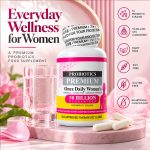
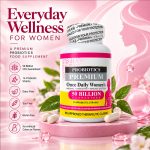

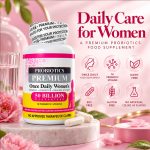
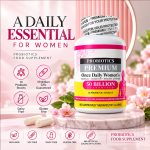



PROBIOTICS 50 BILLION FOR WOMEN – PRODUCT DESCRIPTION
A Multi-Strain Probiotic Formula Designed with Women in Mind.
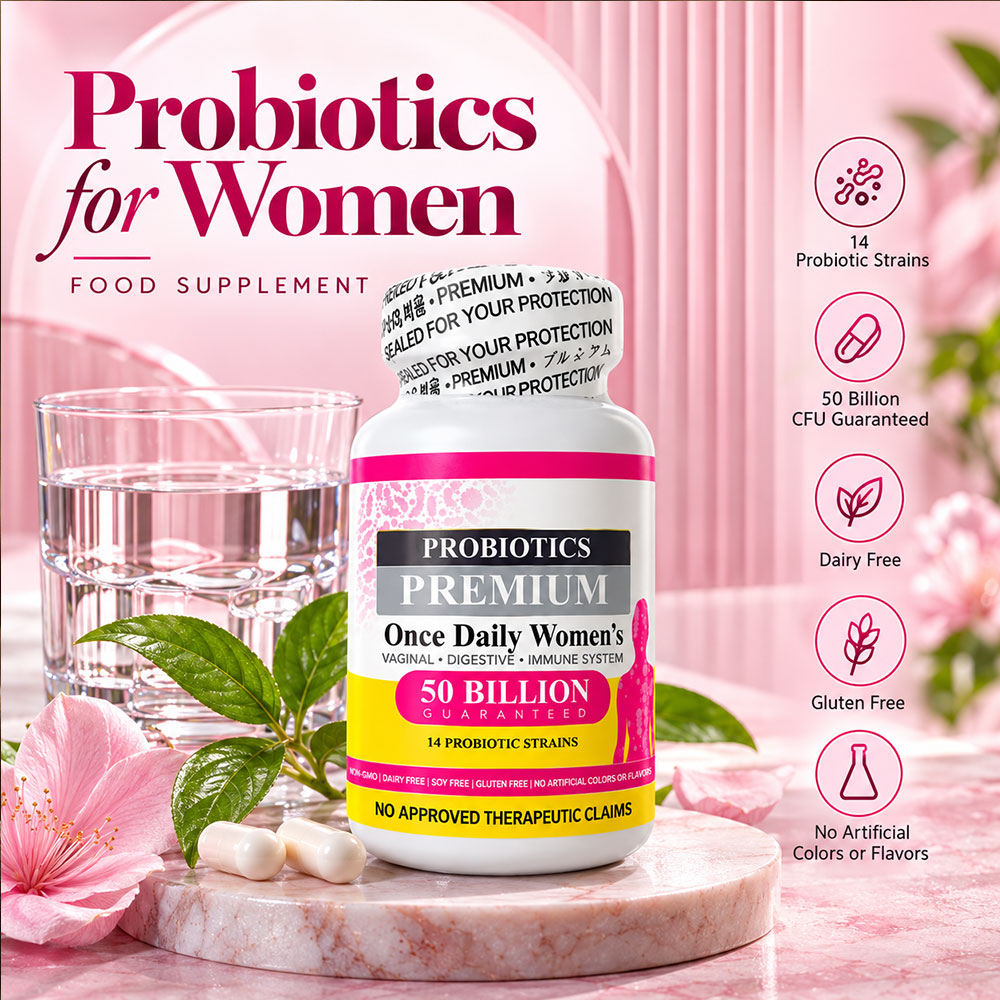
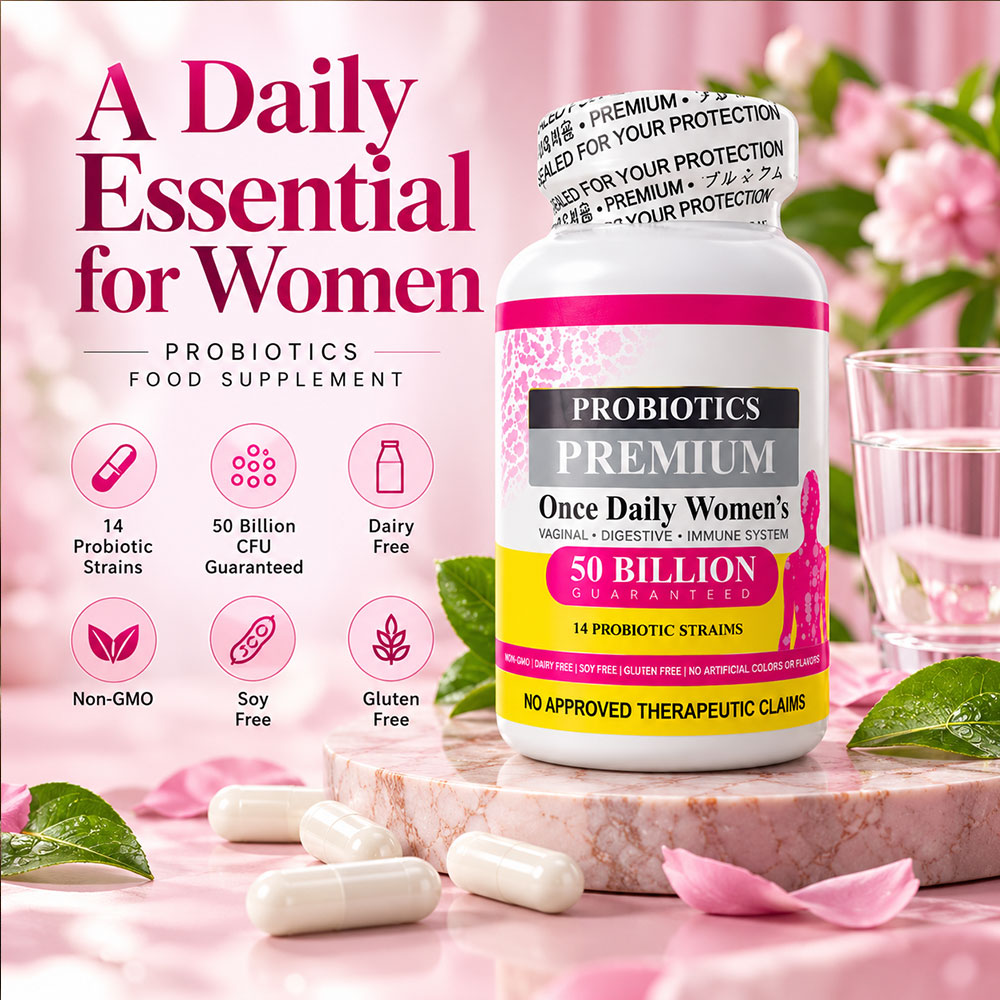
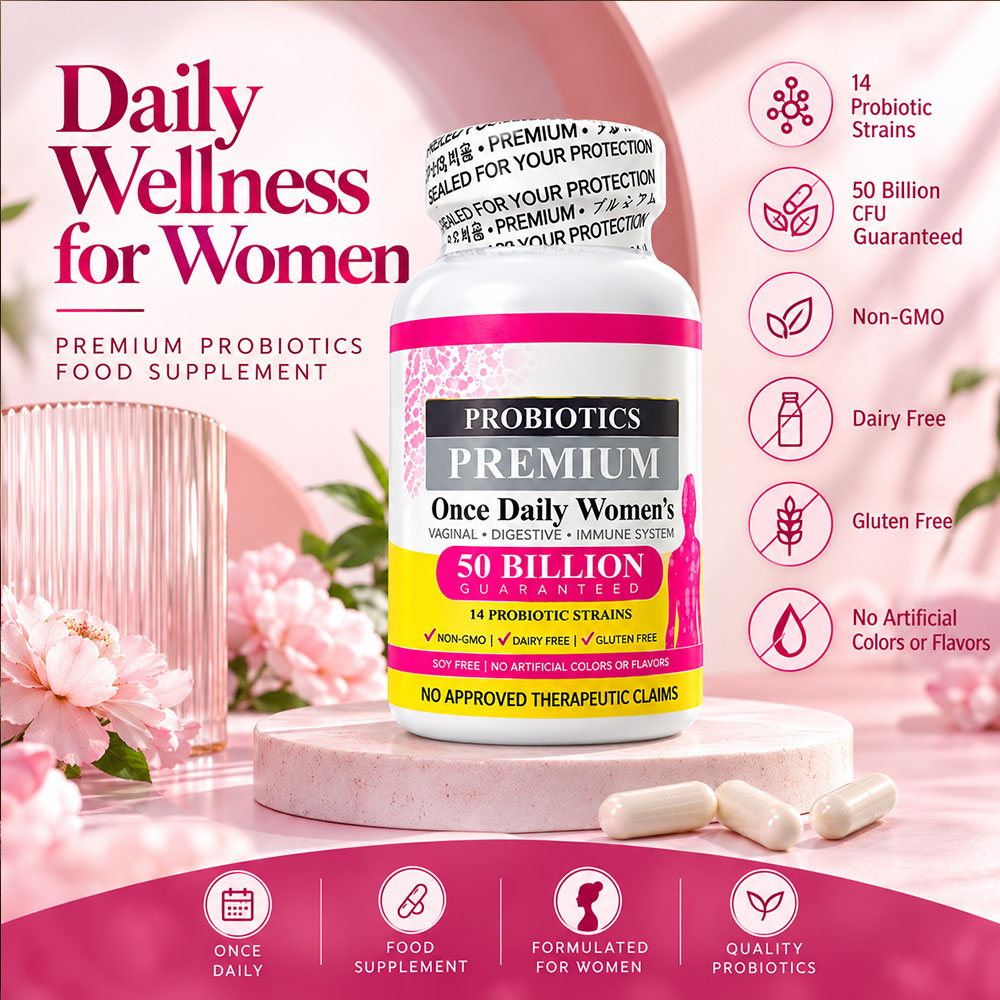
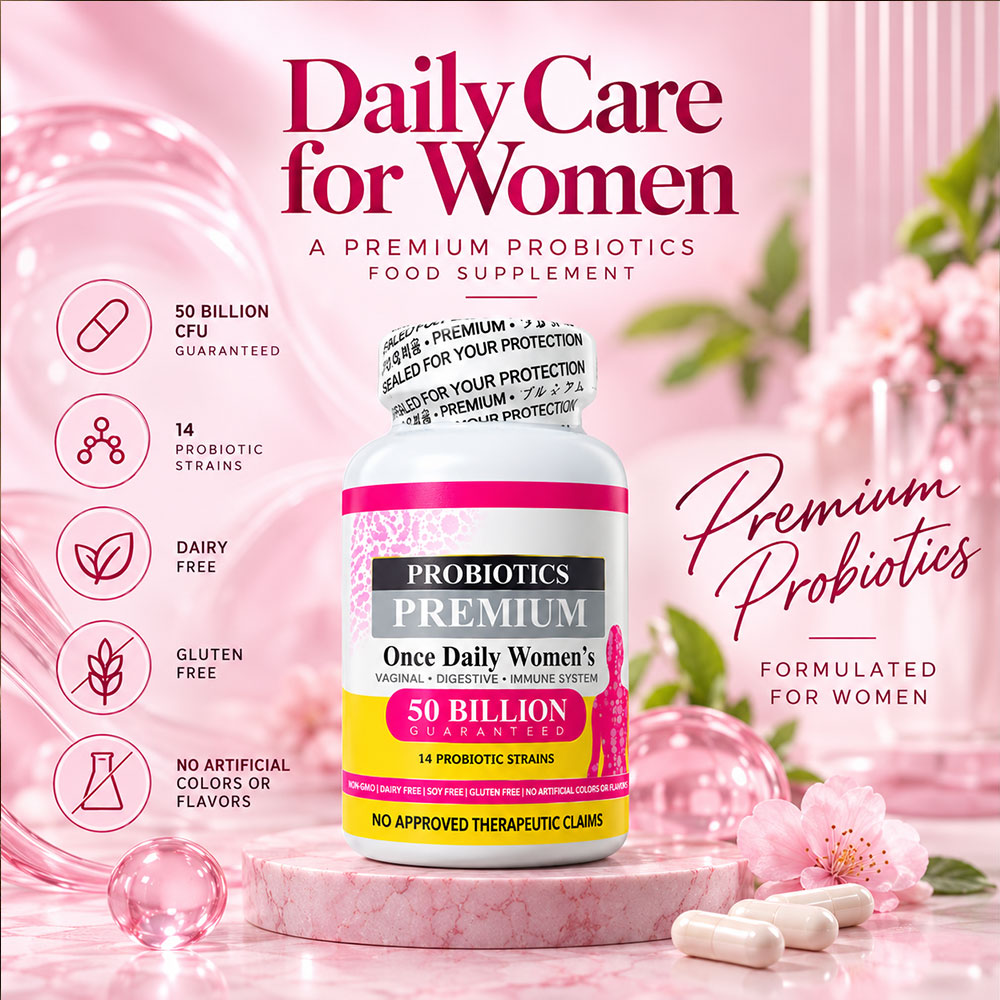
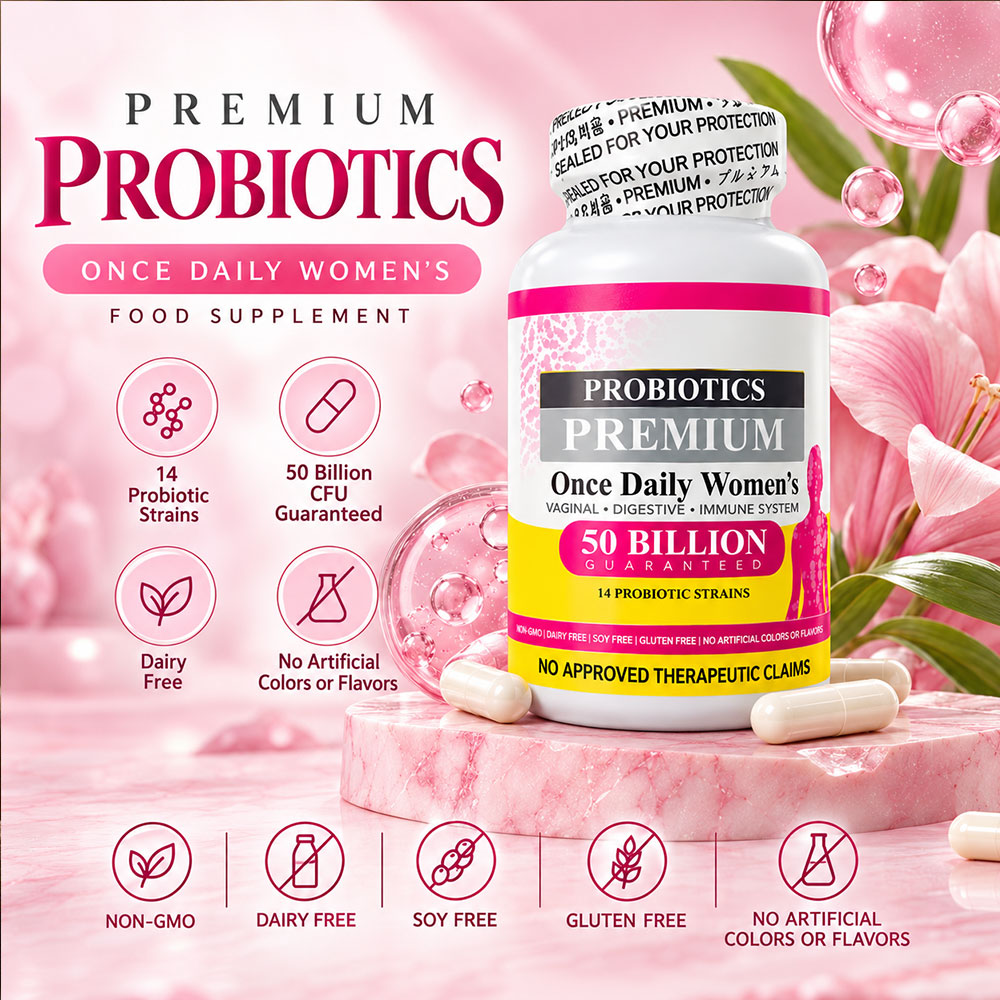
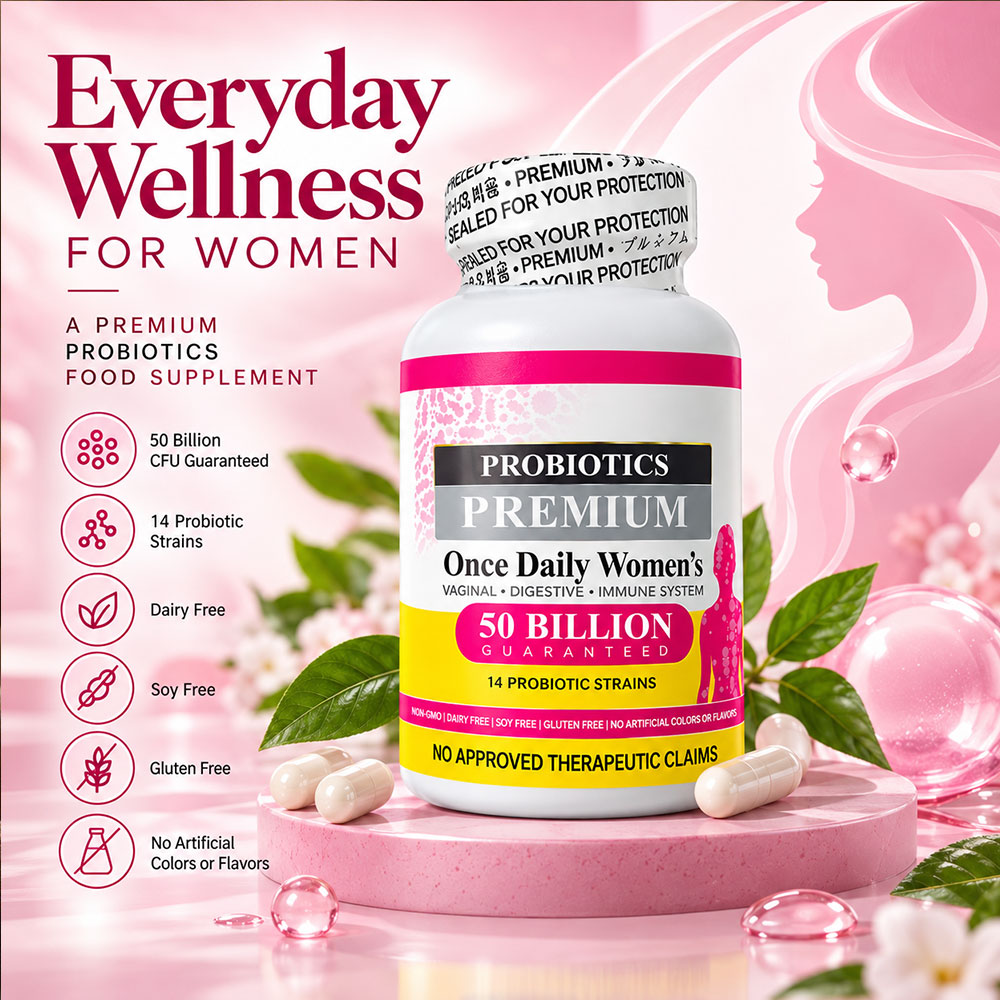
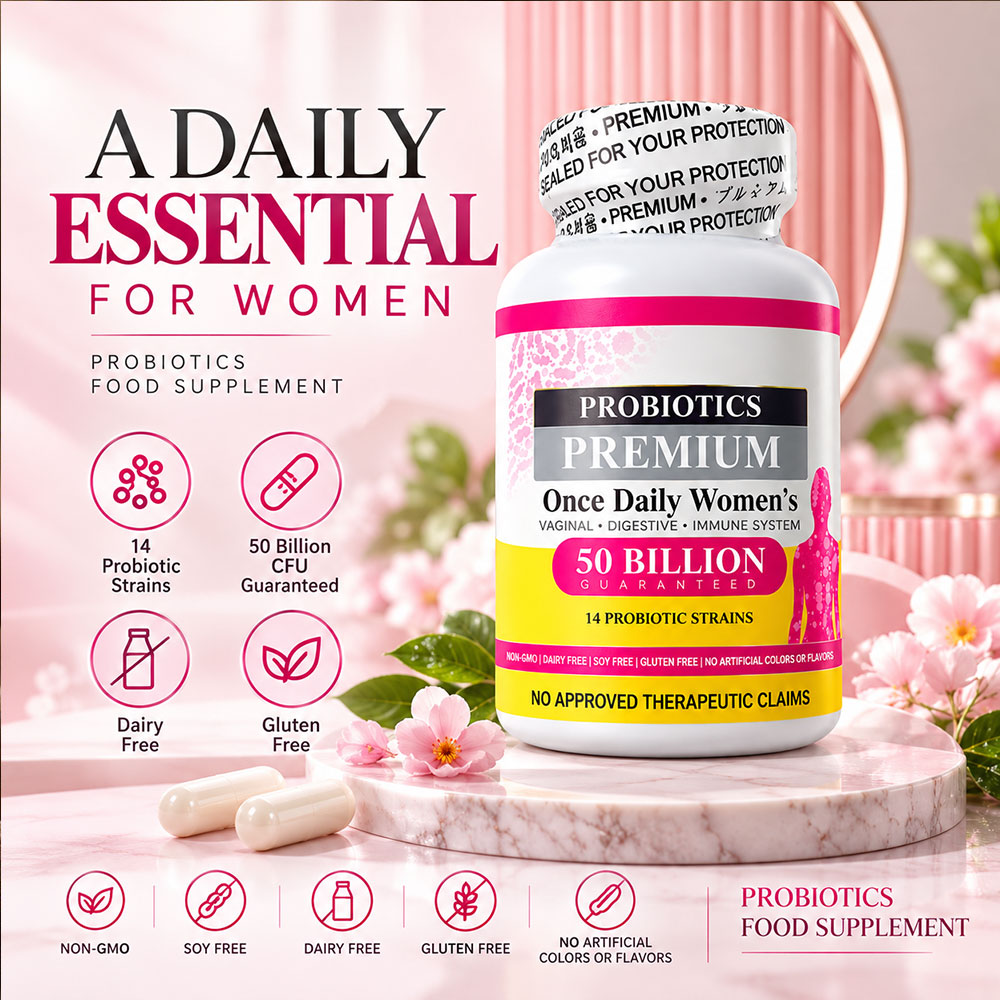
Discover Probiotics 50 Billion for Women, a food supplement featuring a combination of beneficial bacterial cultures selected for a multi-strain probiotic formulation.
Probiotics are live microorganisms that, when consumed in adequate amounts, may provide health benefits depending on the specific strains and their supporting scientific evidence. Different probiotic species and strains have distinct characteristics, making the composition of a probiotic supplement an important consideration.
This formulation features 11 named bacterial species, including members of the Lactobacillus group. These microorganisms are widely studied in microbiome research, particularly for their interactions with microbial communities in the human body.
The term 50 Billion identifies the product’s marketed probiotic strength. The quantity of viable microorganisms is commonly expressed in colony-forming units (CFU), although the precise CFU declaration and whether it applies through the expiration date should be confirmed against the product label.
Presented in a convenient capsule format, Probiotics 50 Billion for Women offers a multi-strain option for women interested in exploring probiotic food supplements as part of their everyday nutritional routine.
Product Name: Probiotics 50 Billion for Women
Form: Capsules
Product Strength: 50 Billion (marketed probiotic strength; refer to the label for the CFU declaration)
Featured Ingredients: 11 named probiotic bacterial species
NO APPROVED THERAPEUTIC CLAIMS.
Product Form: Capsules
Product Strength: 50 Billion (refer to the product label for the CFU declaration)
Serving Size: Follow the serving size indicated on the product label.
Servings per Container: Based on the capsule quantity and serving size indicated on the packaging.
Recommended Usage:
Take Probiotics 50 Billion for Women according to the directions printed on the product packaging. Swallow with water and do not exceed the recommended daily intake.
If taking antibiotics or other medications, consult a healthcare professional regarding appropriate timing and possible interactions.
Precautions:
- Follow the age recommendations indicated on the product label.
- Pregnant or breastfeeding women should consult their healthcare provider before use.
- Individuals with weakened immune systems, serious medical conditions, or those receiving immunosuppressive treatment should consult a healthcare professional before using probiotics.
- Individuals with known allergies to any declared ingredient should avoid the product.
- Mild digestive changes, such as temporary gas or bloating, may occur in some individuals.
- Discontinue use and seek medical advice if an adverse reaction occurs.
- Do not use this supplement to treat vaginal infections, urinary tract infections, or other medical conditions.
- Keep out of reach of children.
Storage Instructions:
Follow the storage temperature and handling instructions printed on the product packaging. Probiotic viability can be affected by heat, moisture, and storage conditions. Do not assume the product is shelf-stable or requires no refrigeration unless stated on its label.
NO APPROVED THERAPEUTIC CLAIMS.
1. Lactobacillus acidophilus
Lactobacillus acidophilus is a lactic acid-producing bacterial species commonly found in probiotic preparations. It has been studied for its interactions with the intestinal microbiota and its role in microbial fermentation. Specific effects depend on the strain and amount used.
2. Lactobacillus plantarum
Lactobacillus plantarum, also classified as Lactiplantibacillus plantarum, is a bacterial species associated with fermented foods and probiotic research. It is known for its ability to metabolize various carbohydrates and produce lactic acid.
3. Lactobacillus casei
Lactobacillus casei, now commonly classified as Lacticaseibacillus casei, belongs to a group of bacteria frequently studied in fermented dairy products and probiotic formulations. Its characteristics vary among individual strains.
4. Lactobacillus paracasei
Lactobacillus paracasei, also classified as Lacticaseibacillus paracasei, is a lactic acid-producing bacterial species used in certain fermented foods and probiotic preparations. It has been investigated for its interactions with the intestinal microbial environment.
5. Lactobacillus bulgaricus
Lactobacillus bulgaricus, commonly known as Lactobacillus delbrueckii subsp. bulgaricus, is a bacterial culture traditionally associated with yogurt fermentation. It contributes to the fermentation process through lactic acid production.
6. Lactobacillus brevis
Lactobacillus brevis, now classified as Levilactobacillus brevis, is a lactic acid-producing species found in certain fermented vegetables and other foods. It has been investigated for its fermentation characteristics and microbial metabolites.
7. Lactobacillus reuteri
Lactobacillus reuteri, now classified as Limosilactobacillus reuteri, is a bacterial species studied in human microbiome research. Some specific strains have been investigated in gastrointestinal and women’s microbiome studies, but findings cannot automatically be applied to every formulation containing this species.
8. Lactobacillus salivarius
Lactobacillus salivarius, also classified as Ligilactobacillus salivarius, is a bacterial species associated with microbial communities in the human body, including the oral and intestinal environments. Its characteristics and potential applications are strain-dependent.
9. Lactobacillus fermentum
Lactobacillus fermentum, now classified as Limosilactobacillus fermentum, is a lactic acid-producing bacterial species found in various fermented foods and microbial environments. It is included in probiotic research involving bacterial metabolism and microbial interactions.
10. Lactobacillus gasseri
Lactobacillus gasseri is a bacterial species found in the human microbiota and studied in certain probiotic formulations. Research has explored specific strains in relation to different microbial environments, but results are not interchangeable across strains or products.
11. Lactobacillus rhamnosus
Lactobacillus rhamnosus, now classified as Lacticaseibacillus rhamnosus, is a widely researched probiotic species. Certain identified strains have been studied for gastrointestinal and women’s microbiome applications. Such findings do not establish equivalent effects for this finished product without strain-specific supporting evidence.
NO APPROVED THERAPEUTIC CLAIMS.
Want to Know More About This Product?
For more information about this product, including its benefits and related research, please contact our team. We’ll be happy to assist you with your inquiries.
Contact Us for More Information
IMPORTANT PRODUCT & CLAIMS NOTE
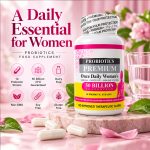
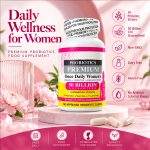
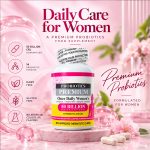
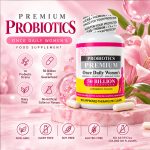
The supplied image identifies the product as “Probiotics Premium,” “Once Daily Women’s,” with
“50 Billion CFU,” and a prebiotic fiber blend identified as FOS. It also displays claims related to
women’s wellness, digestive health, and vaginal health, plus ISO, Halal, HACCP and GMP logos.
There is an internal label discrepancy that should be clarified before using marketing copy: the
right-side graphic says “14 Clinically-Researched Probiotic Strains,” while the bottle image appears
to say “13 Probiotic Strains.” The exact strain list is not fully legible in the supplied image.
Examples visible in the graphic include L. acidophilus, L. rhamnosus and B. lactis. For probiotics,
evidence is strain-specific; genus/species alone are not enough to assume a clinical benefit. The
World Gastroenterology Organisation specifically notes that clinical decisions should use evidence
for the specific probiotic strain and/or prebiotic. cite turn0search48 turn0search4
“50 billion CFU” describes a quantity of viable microorganisms under the stated measurement
conditions; a higher CFU number alone does not prove greater health benefit. The specific strains,
dose, viability through shelf life and clinical evidence matter.
cite turn0search4 turn0search49
The scientific evidence below concerns probiotics, specific probiotic strains, FOS/prebiotics, and
general gut health. It is not a clinical trial of this exact product.
SHORT RESEARCH
1. What probiotics are: Probiotics are live microorganisms that, when administered in adequate
amounts, confer a health benefit on the host. The benefit is not automatically shared by every
bacterial species or every product. cite turn0search2 turn0search4
2. Strain-specific evidence: Probiotic organisms are identified by genus, species and strain. Research
supporting one strain should not automatically be used to claim the same benefit for another strain.
WGO guidance emphasizes strain-specific evidence for clinical decisions.
cite turn0search48 turn0search4
3. CFU count: CFU means colony-forming units. It is used to indicate viable microorganisms. NIH
notes that higher CFU counts alone do not necessarily mean greater health benefits; the specific
microorganisms and evidence matter. cite turn0search4
4. FOS prebiotic: Fructooligosaccharides (FOS) are among the best-studied prebiotic substrates.
Prebiotics are substances selectively utilized by host microorganisms in a way that confers a health
benefit. FOS may promote beneficial microbial groups such as bifidobacteria, although effects depend
on dose and individual microbiota. cite turn0search3
5. Gut health: A 2026 ISAPP consensus statement describes gut health as normal gastrointestinal
function without active gastrointestinal disease and symptoms that significantly affect quality of life.
It also emphasizes that gut health is broader than simply having more or fewer bacteria.
cite turn0search0
2
6. Digestive effects: Some probiotics have evidence for particular gastrointestinal outcomes, but
benefits vary by strain, condition, dose and person. Probiotics should therefore not be marketed as
universally improving digestion for everyone. cite turn0search1 turn0search48
7. Women’s/vaginal health: Some Lactobacillus strains have been studied in vaginal health, but
evidence is strain-specific and indication-specific. A product containing several Lactobacillus species
is not automatically proven to prevent or treat bacterial vaginosis, yeast infection, or urinary
infection. cite turn0search48
8. Safety: Probiotics are generally well tolerated by many healthy people and may cause gas or
bloating. However, serious infections have been reported rarely, particularly in people who are
severely ill or immunocompromised and in certain vulnerable infants. cite turn0search4
PRODUCT INFORMATION VISIBLE IN THE SUPPLIED IMAGE
Product name shown
Probiotics Premium
Positioning shown
Once Daily Women’s
Stated probiotic amount
50 Billion CFU
Prebiotic shown
Strain-count claim
FOS / prebiotic fiber blend
Graphic says 14 clinically-researched strains;
bottle appears to say 13 probiotic strains —
discrepancy requires label verification
Examples visible
Other label claims
L. acidophilus, L. rhamnosus, B. lactis
Soy-free, dairy-free, gluten-free, vegan, non
GMO
Quality/certification logos shown
ISO 9001, Halal, HACCP, GMP
Therapeutic wording shown
Not confirmed from image
“NO APPROVED THERAPEUTIC CLAIMS”
Exact strain designations, CFU guarantee at end
of shelf life, FOS amount, full excipient list,
manufacturer/importer, lot/expiry, storage
conditions, Philippine FDA
registration/notification
1. Ano ang Probiotics Premium?
Batay sa supplied image, ito ay once-daily women’s probiotic supplement na may nakalagay na 50
billion CFU at FOS prebiotic blend.
2. Ano ang probiotics?
Ang probiotics ay live microorganisms na maaaring magbigay ng health benefit kapag sapat ang dami
at ang partikular na strain ay may ebidensiya para sa benefit na iyon.
3. Ano ang ibig sabihin ng CFU?
Ang CFU ay colony-forming units at ginagamit para tantiyahin ang viable microorganisms. Hindi nito,
sa sarili nito, sinusukat ang clinical effectiveness ng probiotic.
4. Mataas ba ang 50 billion CFU?
Malaking numerical CFU count ito, pero hindi ibig sabihin na mas mataas ay awtomatikong mas
maganda. Mahalaga ang specific strains, dose, viability at scientific evidence. cite turn0search4
5. Bakit mahalaga ang probiotic strains?
Magkakaiba ang behavior at clinical evidence ng bawat strain. Ang benefit ay dapat naka-link sa
partikular na strain na pinag-aralan. cite turn0search48
6. Ano ang FOS?
Ang FOS ay fructooligosaccharides, isang uri ng prebiotic substrate na maaaring gamitin ng piling
microorganisms sa bituka.
7. Ano ang prebiotic?
Ang prebiotic ay substrate na selectively ginagamit ng microorganisms ng katawan sa paraang
nagdudulot ng health benefit. cite turn0search3
8. Mabuti ba ang FOS para sa gut?
Ang FOS ay isa sa mas pinag-aralang prebiotics at maaaring magpataas ng ilang beneficial microbial
groups gaya ng bifidobacteria, pero iba-iba ang response ng bawat tao. cite turn0search3
9. Nakakatulong ba ang probiotics sa digestion?
May ilang specific probiotics na may evidence para sa ilang digestive outcomes, pero nag-iiba ang
effect depende sa strain at kondisyon. Hindi dapat ipalagay na pare-pareho ang epekto sa lahat.
10. Nakakabawas ba ng bloating o gas?
8
May ilang strains na maaaring makatulong sa partikular na gastrointestinal symptoms, pero hindi
supported ang general claim na lahat ng probiotics ay nakakabawas ng bloating. Maaari ring
pansamantalang magdulot ng gas ang probiotics. cite turn0search4
11. Nakakatulong ba sa constipation?
May ilang probiotic strains na pinag-aralan para sa bowel regularity at constipation, pero strain
specific ang evidence. Kailangang ma-verify ang exact strains at doses ng product bago gumawa ng
product-specific claim.
12. Nakakatulong ba sa diarrhea?
May ilang strains na may evidence para sa piling uri ng diarrhea, pero nag-iiba ang resulta depende
sa sanhi at strain. Hindi dapat ituring ang supplement bilang universal treatment para sa diarrhea.
13. Nakakatulong ba pagkatapos uminom ng antibiotics?
May ilang specific probiotic strains na pinag-aralan para sa antibiotic-associated diarrhea. Hindi ibig
sabihin nito na pareho ang effect ng lahat ng multi-strain products. cite turn0search48
14. Nakaka-support ba ito sa immune system?
May interaction ang gut microbiome at immune system, at may ilang probiotics na pinag-aaralan
para sa immune-related outcomes. Gayunman, hindi dapat i-market ito bilang guaranteed immune
booster o infection-prevention treatment.
15. Nakakatulong ba ito sa vaginal health?
May ilang Lactobacillus strains na pinag-aralan sa vaginal health, pero strain-specific ang effects. Ang
pagkakaroon lamang ng Lactobacillus species ay hindi patunay na napipigilan o nagagamot ang
vaginal disease.
16. Nakakapigil ba ito ng yeast infection?
Mixed at strain-specific ang evidence. Hindi dapat i-present ang product bilang proven treatment o
guaranteed prevention ng vaginal yeast infection kung walang product-specific clinical evidence.
17. Nakakapigil ba ng bacterial vaginosis?
May ilang probiotic strains na pinag-aralan para sa bacterial vaginosis, pero hindi awtomatikong
applicable ang evidence sa isang unspecified multi-strain product. cite turn0search48
18. Nakakapigil ba ito ng UTI?
May ilang probiotic strategies na pinag-aralan, pero walang sapat na basis para sabihing anumang 50
billion-CFU product ay nakakapigil ng UTI. Magpatingin kung may sintomas ng UTI.
19. Mas maganda ba kapag mas maraming strains?
Hindi awtomatiko. Ang mas maraming strains o mas mataas na CFU ay hindi garantiya ng mas
magandang health benefit. Mas mahalaga ang evidence para sa specific strain at formulation.
20. Sa image, 14 strains ang nakalagay pero parang 13 sa bottle. Alin ang tama?
May visible discrepancy sa supplied image. I-verify ang aktuwal na Supplement Facts/ingredient
panel at current manufacturer specification bago gamitin ang strain-count claim sa marketing.
21. Probiotics ba ang L. acidophilus, L. rhamnosus at B. lactis?
Ang mga ito ay probiotic-associated bacterial taxa, pero ang clinically supported benefit ay
nakadepende sa exact strain at dose, hindi lamang sa species name.
22. Vegan ba ang product?
Nakalagay sa supplied image ang “Vegan.” Product-label claim ito; kung kailangan ng certified vegan
status, i-verify ang supporting documentation.
23. Gluten-free at dairy-free ba ito?
Nakalagay sa supplied image ang “gluten-free” at “dairy-free.” I-verify ang current official label at
manufacturing controls kung mahalaga ang mga ito sa consumer.
24. Non-GMO ba ito?
Nakalagay sa supplied image ang “Non-GMO.” Ituring itong product claim maliban kung may
supporting certification o documentation.
25. Ligtas ba ang probiotics sa healthy adults?
Kadalasan ay well tolerated ng maraming healthy people, bagama’t maaaring magkaroon ng gas o
bloating. Bihira ang serious infections pero naiulat sa high-risk populations. cite turn0search4
26. Sino ang kailangang mag-ingat sa probiotics?
Ang mga taong severely ill, immunocompromised, o medically vulnerable ay dapat kumonsulta sa
healthcare professional bago gumamit ng probiotics. cite turn0search4
27. Maaari ba sa buntis o nagpapasuso?
May ilang probiotic products na pinag-aralan sa pregnancy, pero nakadepende ang safety at benefit
sa specific strain at product. Kumonsulta muna sa OB o healthcare professional.
28. Maaari ba ito sa mga bata?
Huwag ipagpalagay na ang adult women’s probiotic ay angkop sa bata. Gamitin lamang kung
pinapayagan ng label at inaprubahan ng pediatric professional.
29. Patunay ba ang 50 billion CFU na clinically proven ang product?
Hindi. Ang CFU ay quantity measure lamang at hindi proof ng clinical effectiveness. Kailangang
tumugma ang clinical evidence sa specific strains, dose at intended health outcome.
30. Ano ang dapat tingnan bago bumili o gumamit?
Tingnan ang exact strain names at strain IDs, CFU guarantee hanggang expiry, FOS amount, storage
requirements, expiration/use-by date, complete ingredients, manufacturer/importer details, at
Philippine FDA status kung naaangkop. Huwag umasa lamang sa CFU number o marketing claims.


You can verify the authenticity of this product through the official Brand Verification Website to ensure you’re getting only genuine and original items.
Brand Verification – Authenticity Always Wins: Say No to Fake Brands!
1. What is Probiotics 50 Billion for Women?
Probiotics 50 Billion for Women is a food supplement featuring 11 named probiotic bacterial species in capsule form. It is designed for women interested in incorporating probiotic cultures into their supplement routine.
(Ang Probiotics 50 Billion for Women ay food supplement na may 11 named probiotic bacterial species sa capsule form. Designed ito para sa women na gustong magdagdag ng probiotic cultures sa kanilang supplement routine.)
2. What are the benefits of taking Probiotics 50 Billion for Women?
Probiotics are studied for their interactions with the human microbiome. However, specific benefits depend on the bacterial strains, their quantities, and supporting evidence. Improvements in digestion, vaginal health, immunity, or other outcomes have not been established for this finished product.
(Pinag-aaralan ang probiotics dahil sa interactions nila sa human microbiome. Pero ang specific benefits ay depende sa bacterial strains, quantities, at supporting evidence. Hindi established ang improvements sa digestion, vaginal health, immunity, o ibang outcomes mula sa finished product.)
3. How should I take Probiotics 50 Billion for Women?
Follow the recommended serving size and directions printed on the product label. Swallow the capsules with water and do not exceed the recommended daily intake.
(Sundin ang recommended serving size at directions sa product label. Inumin ang capsules kasama ng tubig at huwag lumampas sa recommended daily intake.)
4. Can I take probiotics every day?
Some probiotic products are intended for daily use. Follow the directions for this particular product, as suitability depends on the formulation and individual health circumstances.
(May probiotic products na intended for daily use. Sundin ang directions ng specific product na ito dahil ang suitability ay depende sa formulation at individual health circumstances.)
5. Are there any possible side effects?
Some individuals may experience temporary gas, bloating, or changes in bowel habits when starting a probiotic supplement. Individuals with weakened immune systems or serious illnesses should seek medical advice before use.
(May ilan na maaaring makaranas ng temporary gas, bloating, o pagbabago sa bowel habits kapag nagsisimula ng probiotic supplement. Kung mahina ang immune system o may serious illness, mag-consult muna.)
6. Can probiotics help with digestive health?
Certain identified probiotic strains have been studied for specific digestive applications. However, those findings cannot automatically be applied to this finished product without information about its exact strains and supporting evidence.
(May ilang identified probiotic strains na pinag-aralan para sa specific digestive applications. Pero hindi automatic na applicable ang findings na iyon sa finished product nang walang information tungkol sa exact strains at supporting evidence.)
7. Can probiotics help reduce bloating?
Some probiotic strains have been investigated for digestive discomfort, but results vary. There is no established evidence that this particular product consistently reduces bloating.
(May ilang probiotic strains na pinag-aralan para sa digestive discomfort, pero iba-iba ang results. Walang established evidence na ang particular product na ito ay consistent na nakakapagbawas ng bloating.)
8. Can I take probiotics with vitamins or other supplements?
Combining supplements may be appropriate in some circumstances, but it is best to consult a healthcare professional, particularly if you take multiple products or medications.
(Maaaring appropriate ang pagsabay ng supplements sa ilang situations, pero mas mabuting mag-consult muna, lalo na kung marami kang iniinom na products o medications.)
9. Can I take probiotics while taking antibiotics?
Ask your healthcare professional about using probiotics during antibiotic treatment. The appropriate timing depends on the antibiotic and probiotic formulation. Some professionals recommend separating doses, but this should not replace individualized advice.
(Magtanong sa healthcare professional tungkol sa paggamit ng probiotics habang umiinom ng antibiotics. Ang tamang timing ay depende sa antibiotic at probiotic formulation. May mga pagkakataong nirerekomendang paghiwalayin ang doses, pero dapat sundin ang individualized advice.)
10. How long before I notice results?
There is no guaranteed timeline for noticeable changes. Responses to probiotics vary depending on the specific strains, formulation, and individual circumstances.
(Walang guaranteed timeline para sa noticeable changes. Nagkakaiba ang response sa probiotics depende sa specific strains, formulation, at individual circumstances.)
11. What does 50 Billion mean in probiotics?
The term generally refers to the number of microorganisms, often measured in colony-forming units or CFU. Check the product label for the exact CFU declaration and whether the stated count is guaranteed through the expiration date.
(Ang 50 Billion ay karaniwang tumutukoy sa bilang ng microorganisms na madalas sinusukat sa colony-forming units o CFU. Tingnan ang product label para sa exact CFU declaration at kung guaranteed ang count hanggang expiration date.)
12. What are colony-forming units (CFU)?
CFU is a measurement used to estimate the number of viable microorganisms capable of forming colonies under specified testing conditions.
(Ang CFU ay measurement na ginagamit para i-estimate ang bilang ng viable microorganisms na kayang bumuo ng colonies sa specified testing conditions.)
13. Does a higher CFU count mean a better probiotic?
Not necessarily. A higher CFU count does not automatically mean better results. The identity of the strains, their quantities, formulation quality, and evidence for the intended use are also important.
(Hindi palagi. Ang mas mataas na CFU count ay hindi automatic na mas maganda ang results. Mahalaga rin ang identity ng strains, quantities, formulation quality, at evidence para sa intended use.)
14. Why does this product contain multiple probiotic species?
A multi-species formulation combines different types of beneficial bacterial cultures. Each species has distinct characteristics, although the presence of multiple species does not automatically establish greater effectiveness.
(Ang multi-species formulation ay combination ng iba’t ibang beneficial bacterial cultures. May sariling characteristics ang bawat species, pero hindi automatic na mas effective ang product dahil marami itong species.)
15. What is Lactobacillus acidophilus?
Lactobacillus acidophilus is a lactic acid-producing bacterial species commonly used in probiotic preparations and studied for its interactions with intestinal microbial communities.
(Ang Lactobacillus acidophilus ay lactic acid-producing bacterial species na karaniwang ginagamit sa probiotic preparations at pinag-aaralan para sa interactions nito sa intestinal microbial communities.)
16. What is Lactobacillus plantarum?
Lactobacillus plantarum is a bacterial species found in certain fermented foods. It is known for its fermentation characteristics and is included in various probiotic research studies.
(Ang Lactobacillus plantarum ay bacterial species na matatagpuan sa ilang fermented foods. Kilala ito sa fermentation characteristics at kasama sa iba’t ibang probiotic research studies.)
17. What is Lactobacillus reuteri?
Lactobacillus reuteri is a bacterial species studied in human microbiome research. Some specific strains have been investigated for gastrointestinal and women’s microbiome applications, but findings vary by strain.
(Ang Lactobacillus reuteri ay bacterial species na pinag-aaralan sa human microbiome research. May specific strains na pinag-aralan para sa gastrointestinal at women’s microbiome applications, pero nagkakaiba ang findings depende sa strain.)
18. What is Lactobacillus rhamnosus?
Lactobacillus rhamnosus is a widely studied probiotic species. Research involving particular strains should not be interpreted as proof that all products containing this species produce the same effects.
(Ang Lactobacillus rhamnosus ay widely studied probiotic species. Ang research tungkol sa particular strains ay hindi patunay na lahat ng products na may species na ito ay may parehong effects.)
19. Can this probiotic improve vaginal health?
Certain specifically identified probiotic strains have been investigated in women’s vaginal microbiome research. However, the finished product has not been established to prevent or treat vaginal infections or produce specific vaginal health outcomes.
(May ilang specifically identified probiotic strains na pinag-aralan sa women’s vaginal microbiome research. Pero hindi established na ang finished product ay nakakapigil o nakakagamot ng vaginal infections o nagbibigay ng specific vaginal health outcomes.)
20. Can this product prevent urinary tract infections?
There is insufficient product-specific evidence that Probiotics 50 Billion for Women prevents urinary tract infections. Anyone experiencing UTI symptoms should seek appropriate medical advice.
(Walang sapat na product-specific evidence na ang Probiotics 50 Billion for Women ay nakakapigil ng urinary tract infections. Kung may UTI symptoms, mag-seek ng appropriate medical advice.)
21. Can probiotics treat yeast infections or bacterial vaginosis?
This product should not be used as a treatment for yeast infections or bacterial vaginosis. These conditions require proper evaluation and appropriate medical management.
(Hindi dapat gamitin ang product na ito bilang treatment sa yeast infections o bacterial vaginosis. Kailangan ng proper evaluation at appropriate medical management para sa mga conditions na ito.)
22. Can probiotics strengthen the immune system?
The microbiome interacts with the immune system, and certain probiotic strains have been investigated in this area. However, this does not establish that the finished product boosts immunity or prevents infections.
(May interaction ang microbiome sa immune system, at may ilang probiotic strains na pinag-aaralan dito. Pero hindi nito pinatutunayan na ang finished product ay nakakapag-boost ng immunity o nakakapigil ng infections.)
23. Can probiotics balance hormones or relieve PMS symptoms?
There is insufficient product-specific evidence that this supplement balances estrogen, regulates hormones, or relieves PMS or menopause symptoms.
(Walang sapat na product-specific evidence na ang supplement na ito ay nagba-balance ng estrogen, nagre-regulate ng hormones, o nakakapag-relieve ng PMS o menopause symptoms.)
24. Can probiotics improve skin appearance?
Research continues into connections between the gut microbiome and skin health. However, this product has not been established to treat acne, eczema, or other skin conditions.
(Patuloy ang research tungkol sa connection ng gut microbiome at skin health. Pero hindi established na ang product na ito ay nakakagamot ng acne, eczema, o ibang skin conditions.)
25. Can probiotics help with weight management?
The effects of probiotics on body weight remain an area of research and can vary by strain. This product has not been established to cause weight loss or reduce body fat.
(Ang effects ng probiotics sa body weight ay pinag-aaralan pa at maaaring mag-iba depende sa strain. Hindi established na ang product na ito ay nakakapagpapayat o nakakapagbawas ng body fat.)
26. Can pregnant or breastfeeding women take this product?
Pregnant or breastfeeding women should consult their healthcare provider before taking this probiotic supplement to determine whether its formulation is appropriate for them.
(Ang buntis o nagpapasuso ay dapat mag-consult muna sa healthcare provider para malaman kung appropriate sa kanila ang formulation ng probiotic supplement.)
27. Who should seek medical advice before taking probiotics?
Individuals with weakened immune systems, serious illnesses, implanted medical devices, or those receiving immunosuppressive treatment should consult a healthcare professional before using probiotic supplements.
(Ang may weakened immune system, serious illness, implanted medical devices, o sumasailalim sa immunosuppressive treatment ay dapat mag-consult muna bago gumamit ng probiotic supplements.)
28. Does this probiotic require refrigeration?
Storage requirements depend on the product formulation and packaging. Follow the temperature and storage instructions on the label. Do not assume refrigeration is unnecessary unless the manufacturer specifically indicates this.
(Ang storage requirements ay depende sa formulation at packaging. Sundin ang temperature at storage instructions sa label. Huwag i-assume na hindi kailangan ng refrigeration maliban kung specifically indicated ng manufacturer.)
29. Is Probiotics 50 Billion for Women FDA-approved?
For food supplements in the Philippines, the appropriate terminology is FDA-registered when a valid product registration applies. A registration number was not included in the supplied information, so refer to the product label for its registration details. FDA registration does not mean endorsement of therapeutic claims.
(Para sa food supplements sa Philippines, ang appropriate term ay FDA-registered kung may valid product registration. Walang registration number sa supplied information, kaya tingnan ang product label para sa registration details. Ang FDA registration ay hindi endorsement ng therapeutic claims.)
30. Is Probiotics 50 Billion for Women a medicine?
No. Probiotics 50 Billion for Women is presented as a food supplement containing probiotic bacterial cultures. It should not be used as a substitute for medical treatment or prescribed medications.
(Hindi. Ang Probiotics 50 Billion for Women ay food supplement na may probiotic bacterial cultures. Hindi ito dapat gamitin bilang pamalit sa medical treatment o prescribed medications.)
Contact our leaders for faster transactions.
For a smoother and quick process, feel free to reach out to one of our leaders. They’re available to assist you with any questions or support you may need.
Contact Nos.:
For complains, suggestions or inquiries
We value your feedback! If you have any complaints, suggestions or other inquiries, please don’t hesitate to react out to us.
Contact Nos.:











Reviews
There are no reviews yet