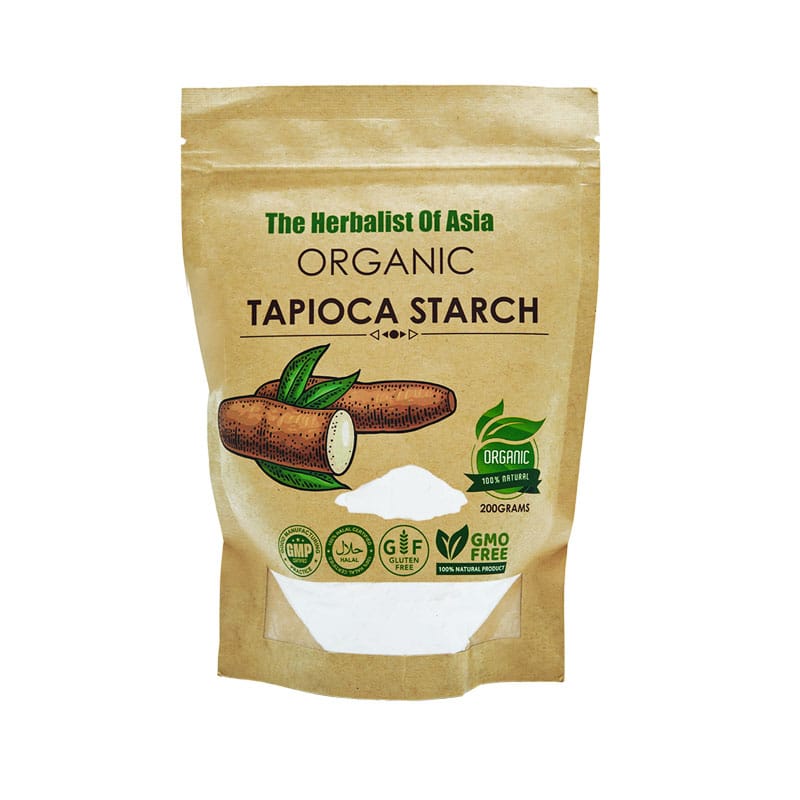
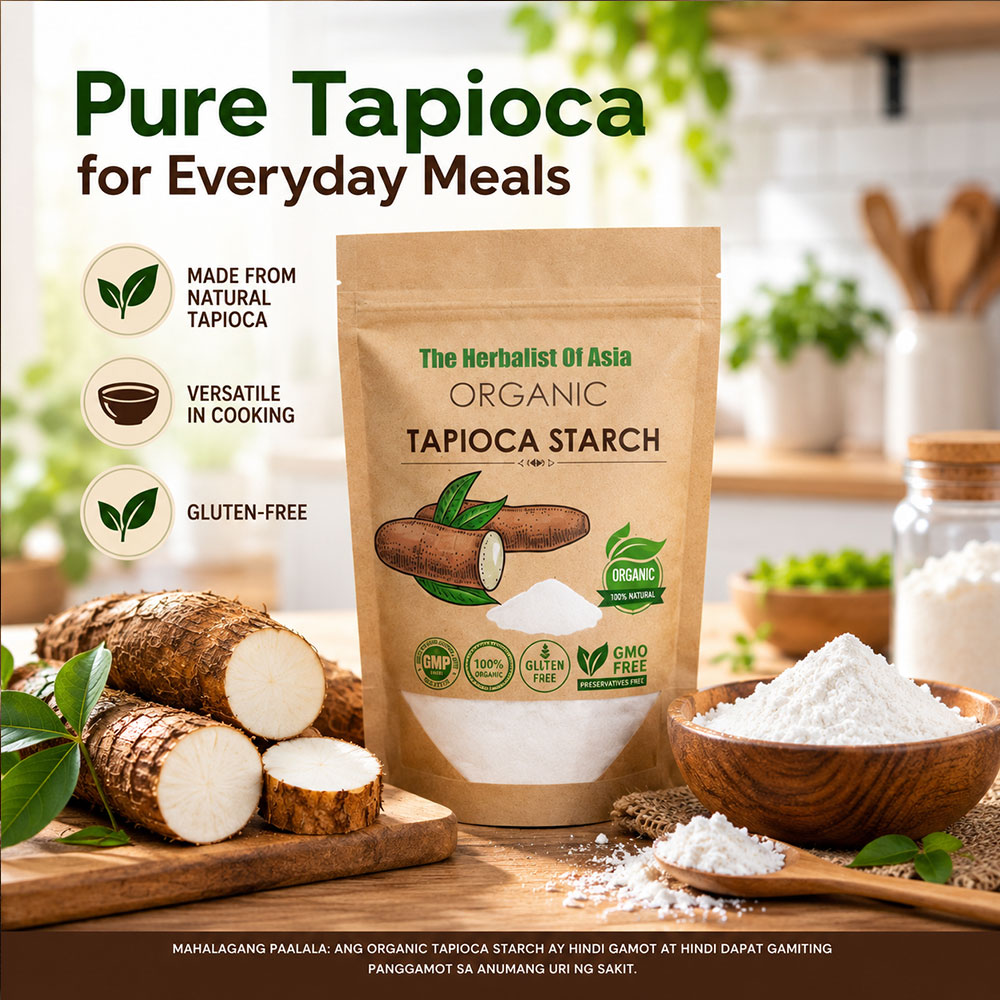
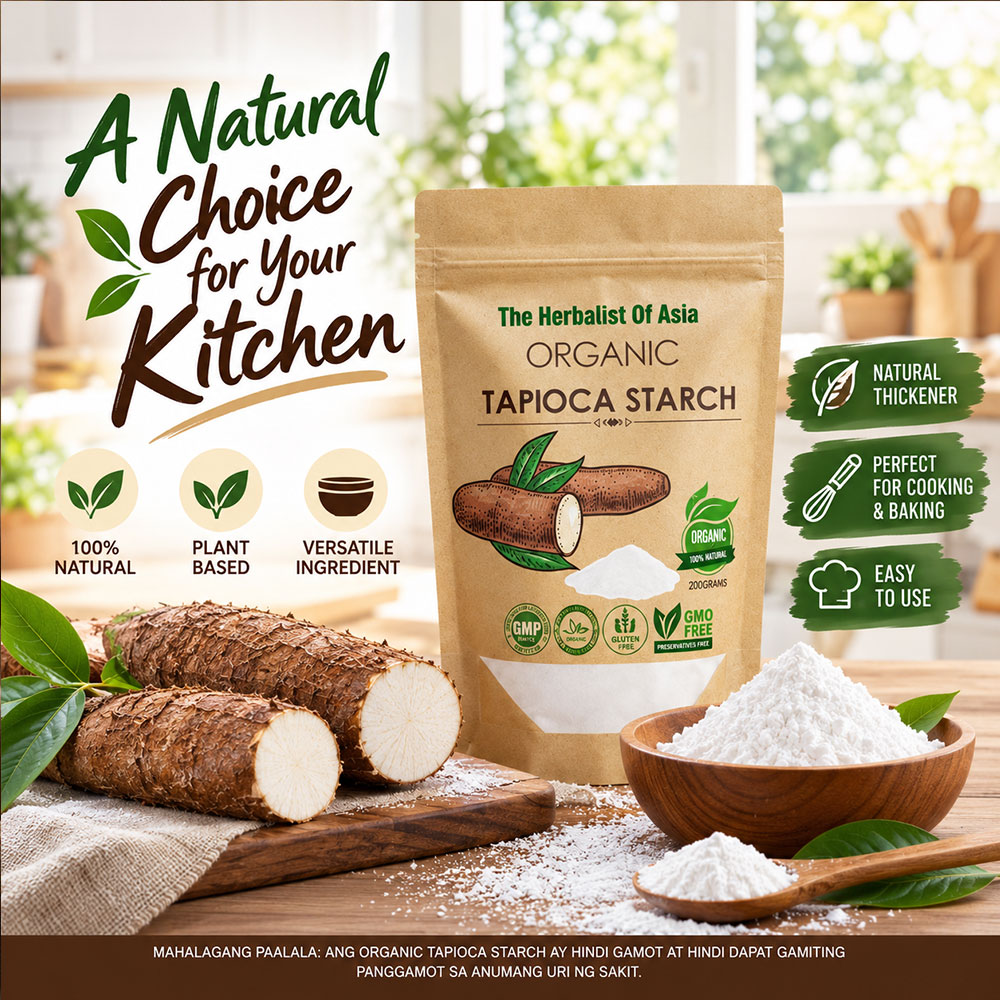
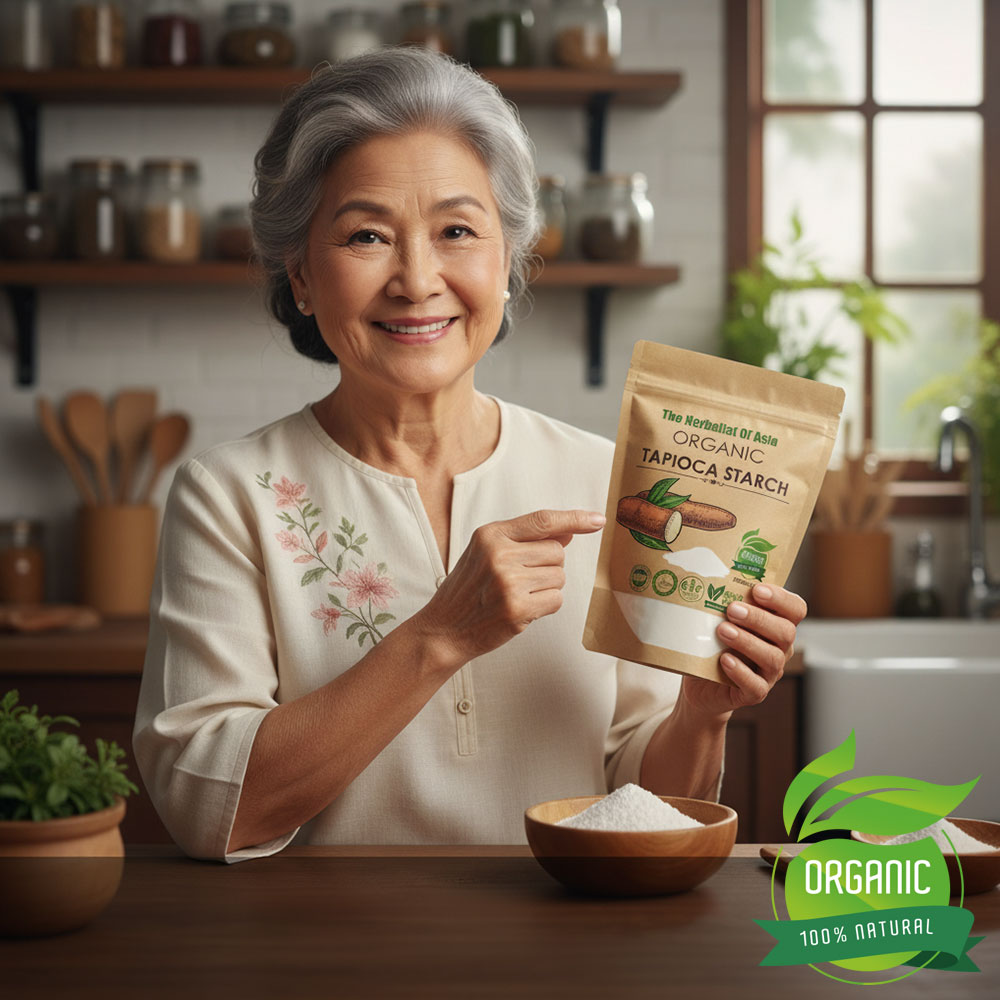
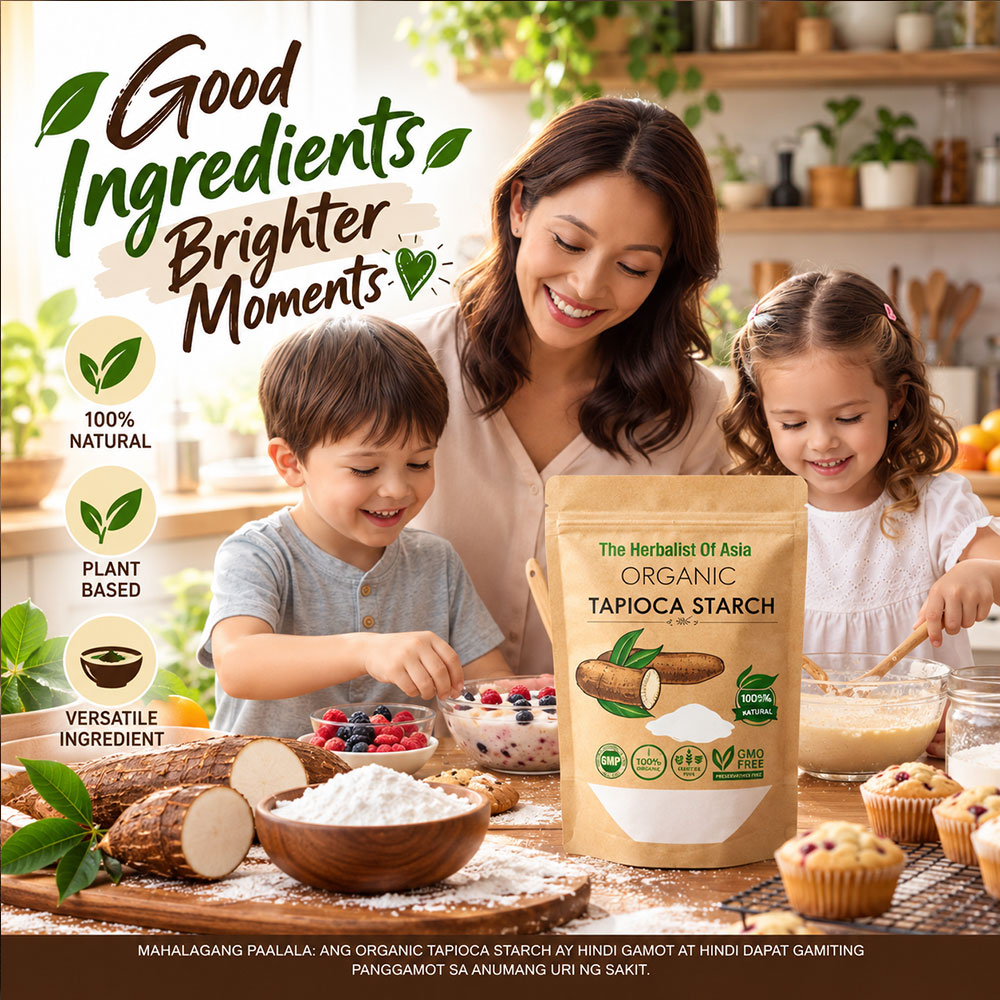
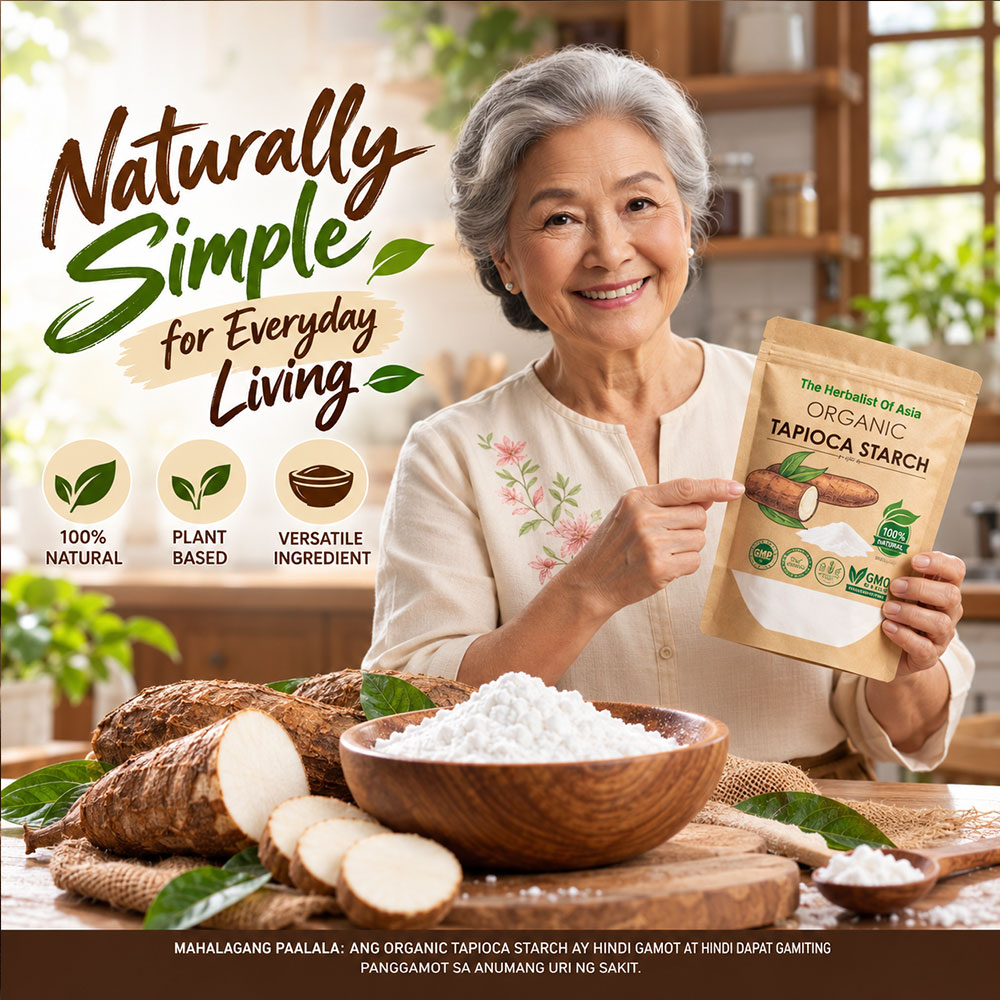
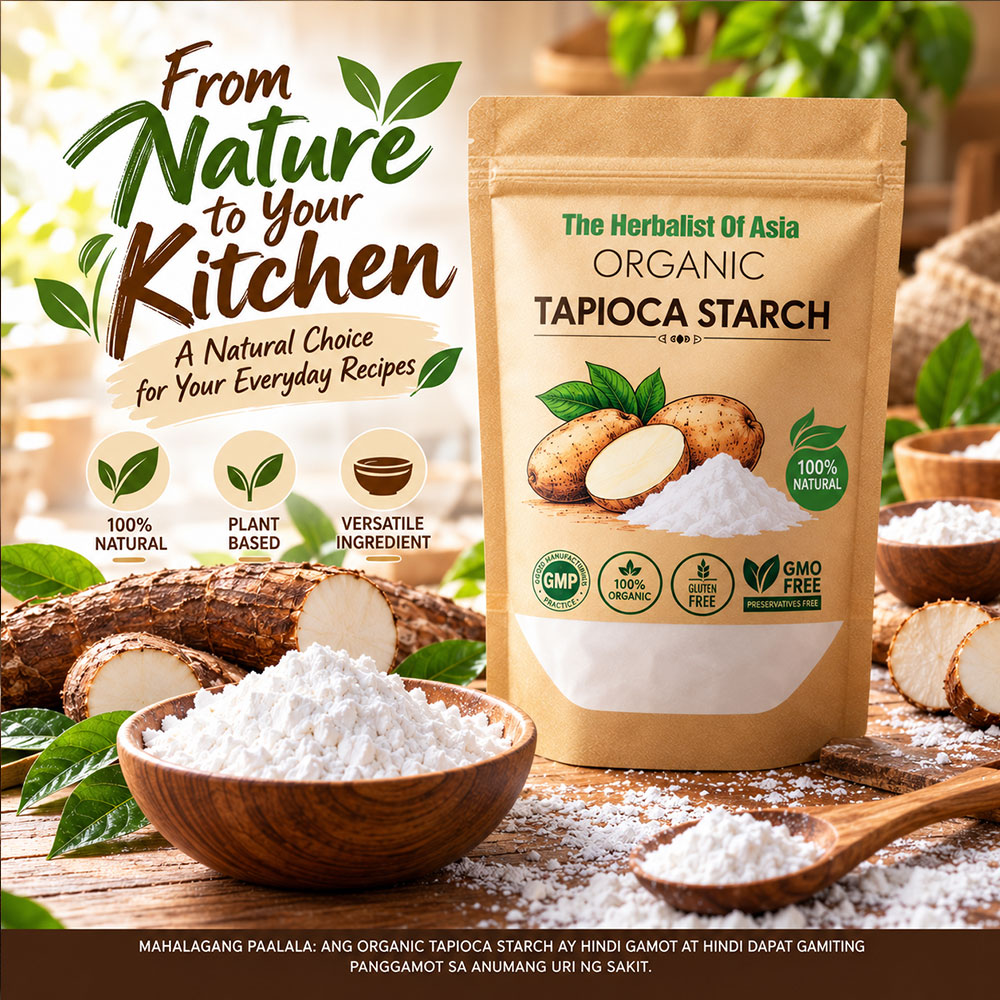
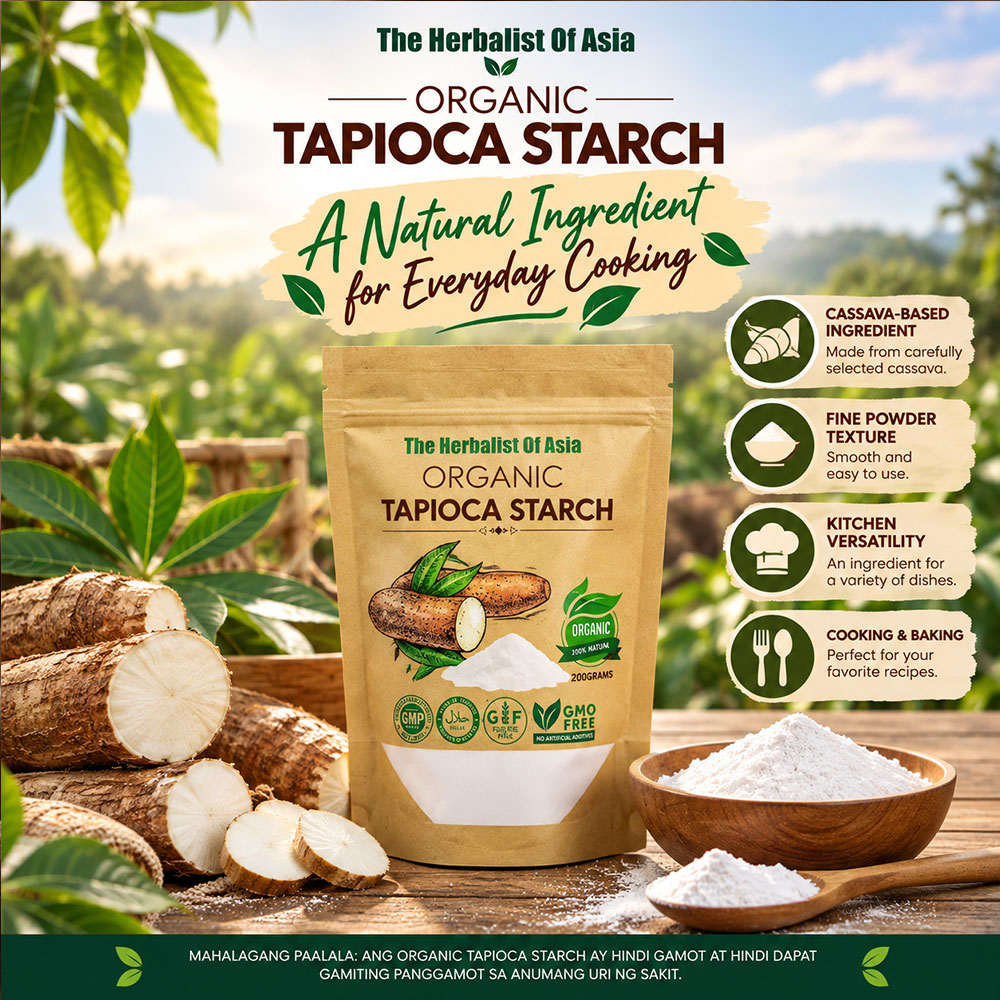
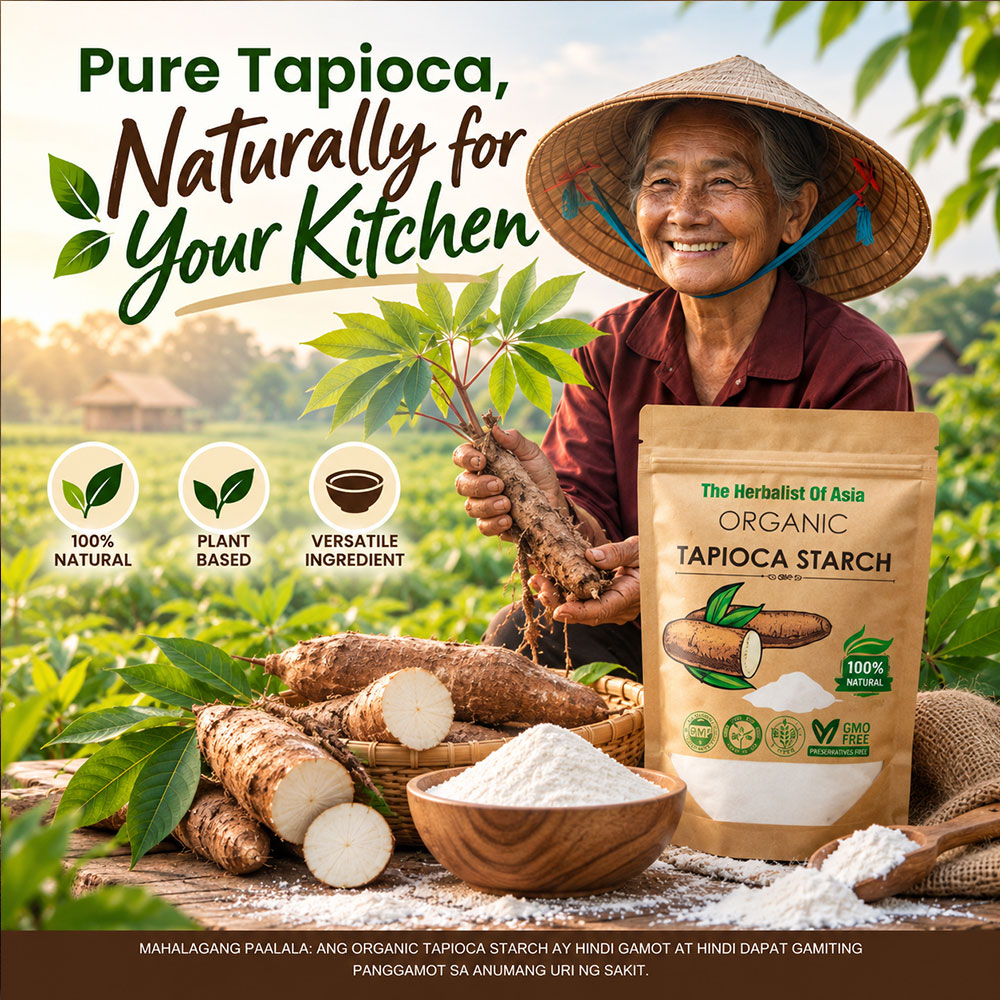
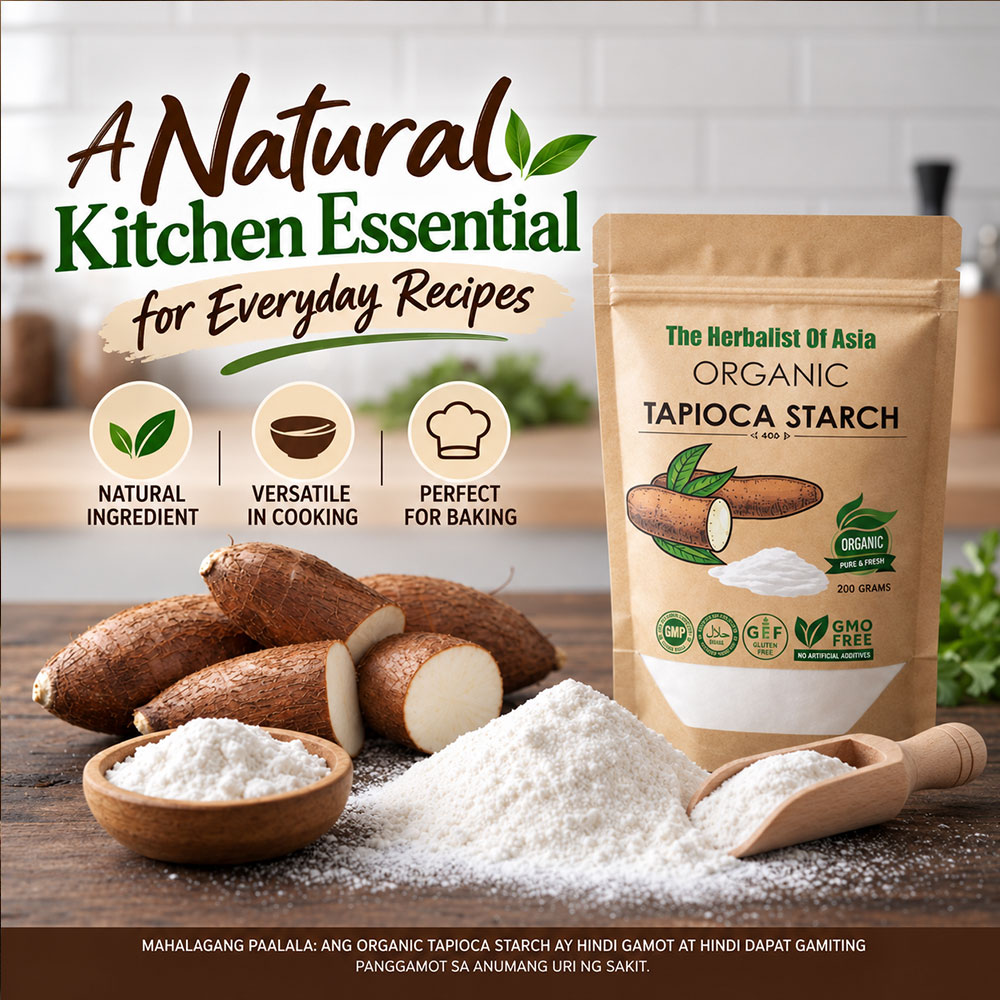
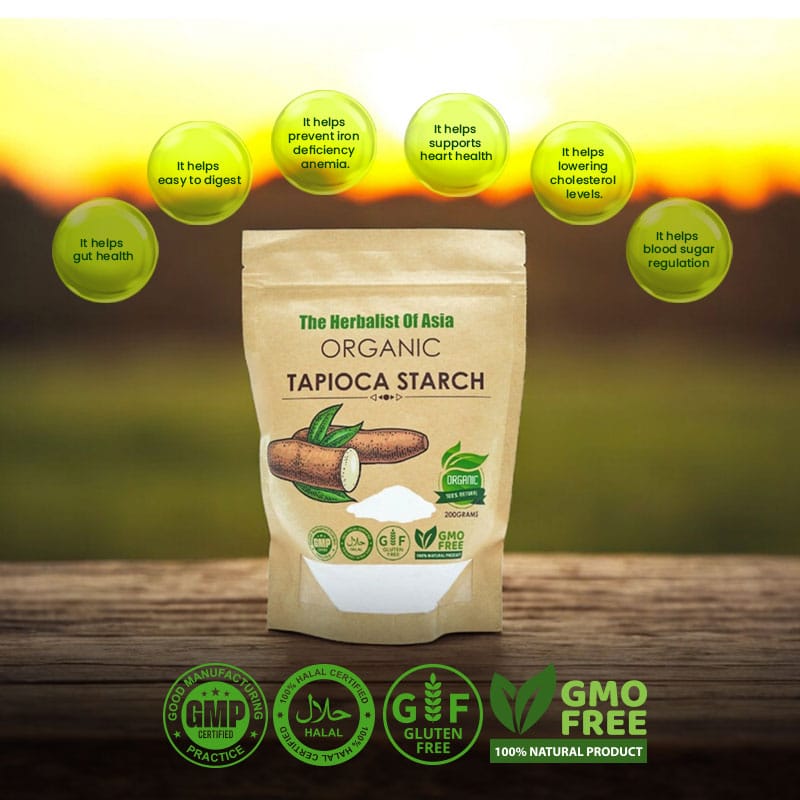
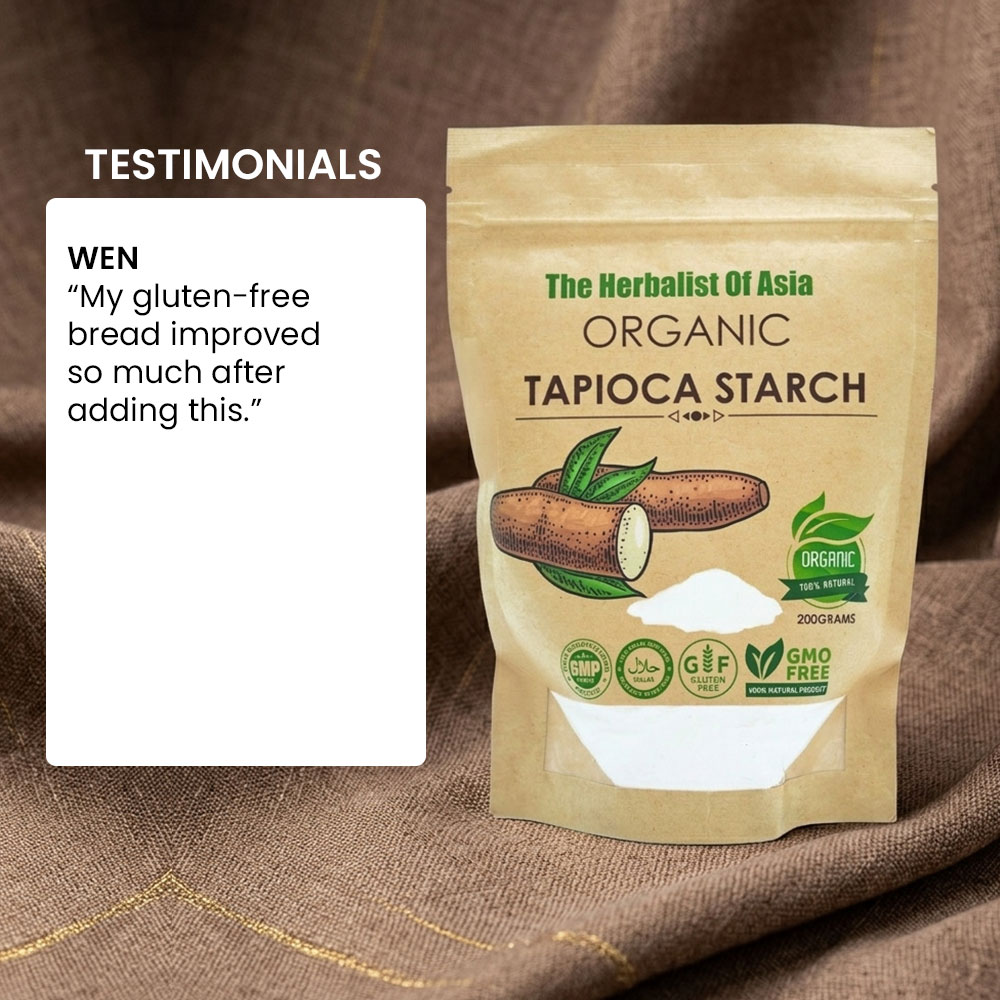
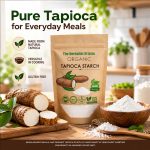
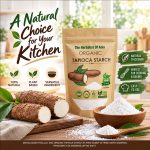
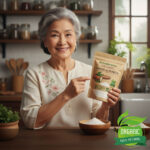
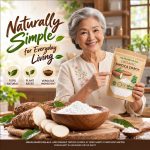
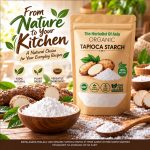
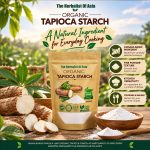
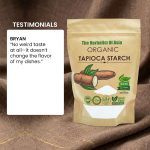
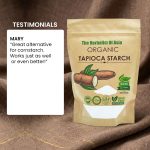
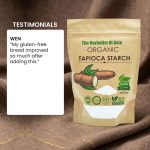
Tapioca starch is a naturally gluten-free ingredient that’s gentle on the stomach and easy to digest, making it suitable for people with food sensitivities. It provides quick energy since it is easily converted into glucose, and it helps improve texture and moisture in foods, giving a soft, chewy, or crispy finish depending on use. Tapioca starch is low in fat and free from common allergens, supports smooth digestion when eaten in moderation, and is widely used as a clean thickener and binding agent that does not alter the taste or color of dishes, making it ideal for both sweet and savory recipes.
Grow Naturally and Get an Exclusive Access to Over 100 Products

-10%


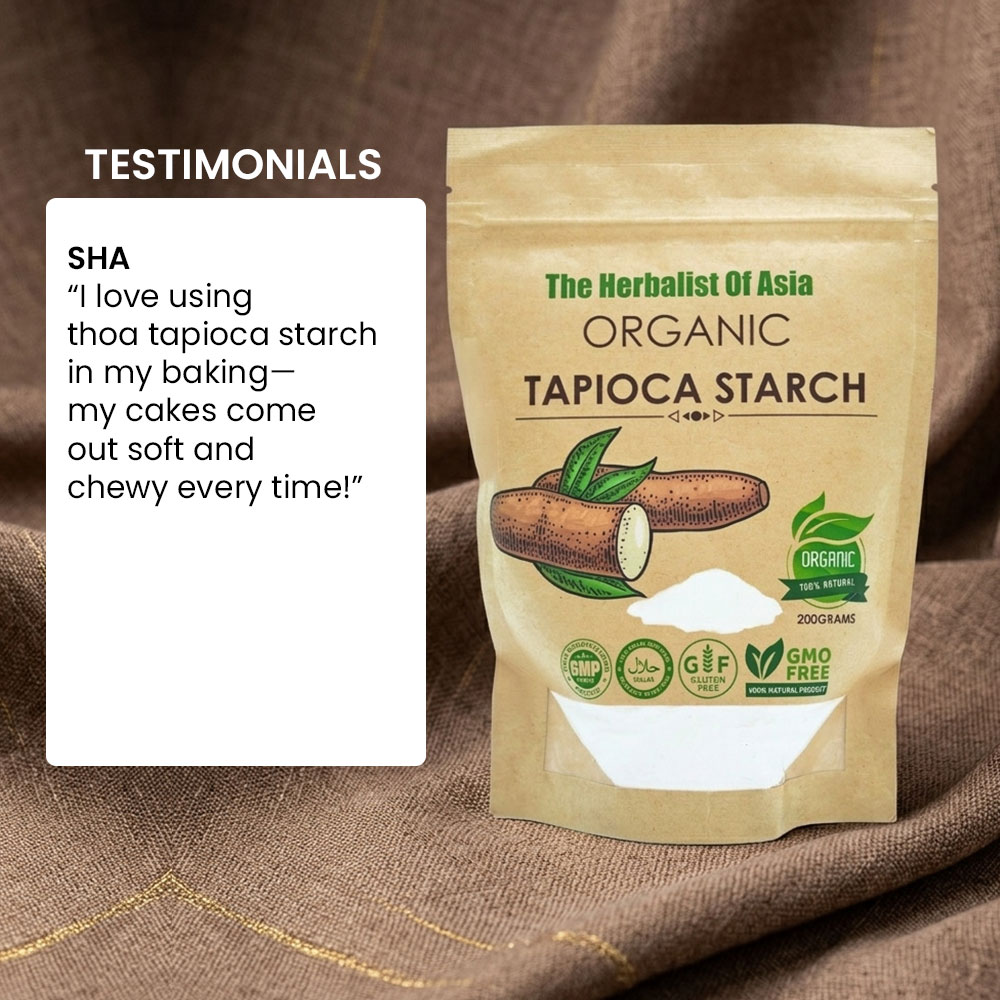
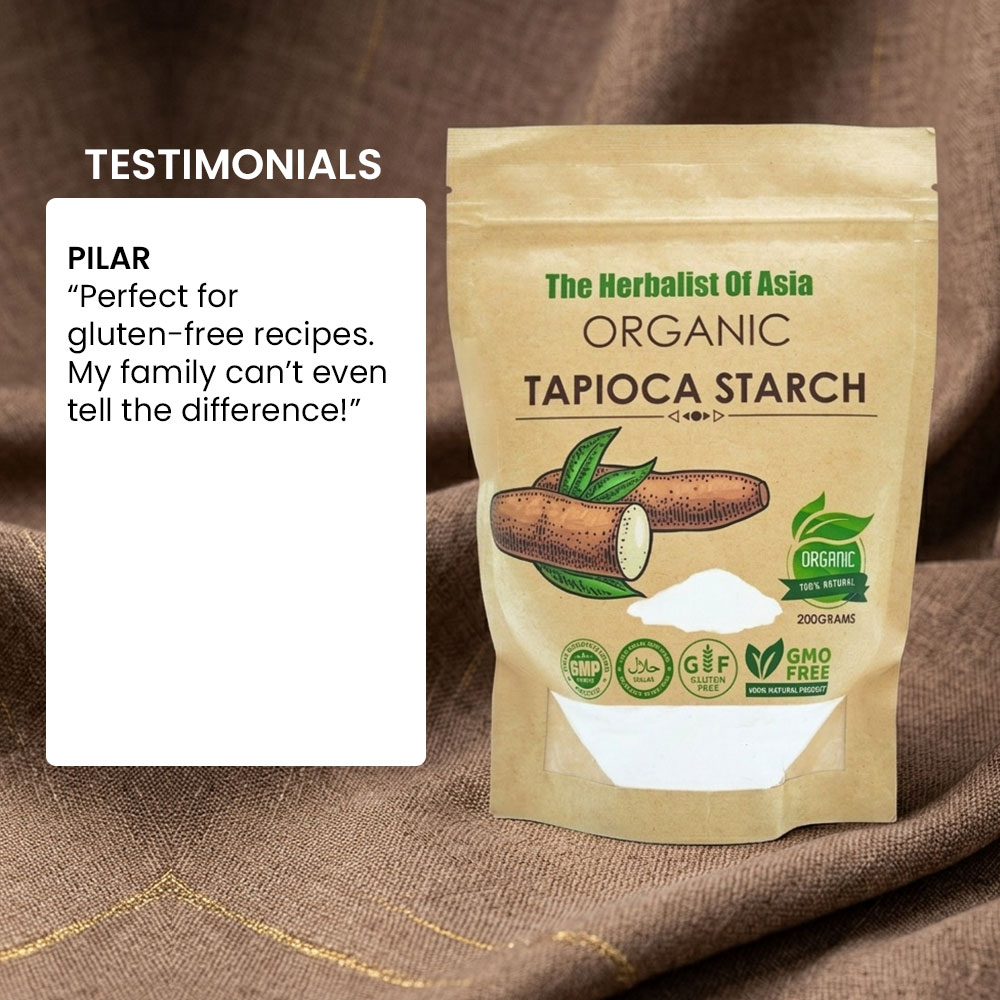
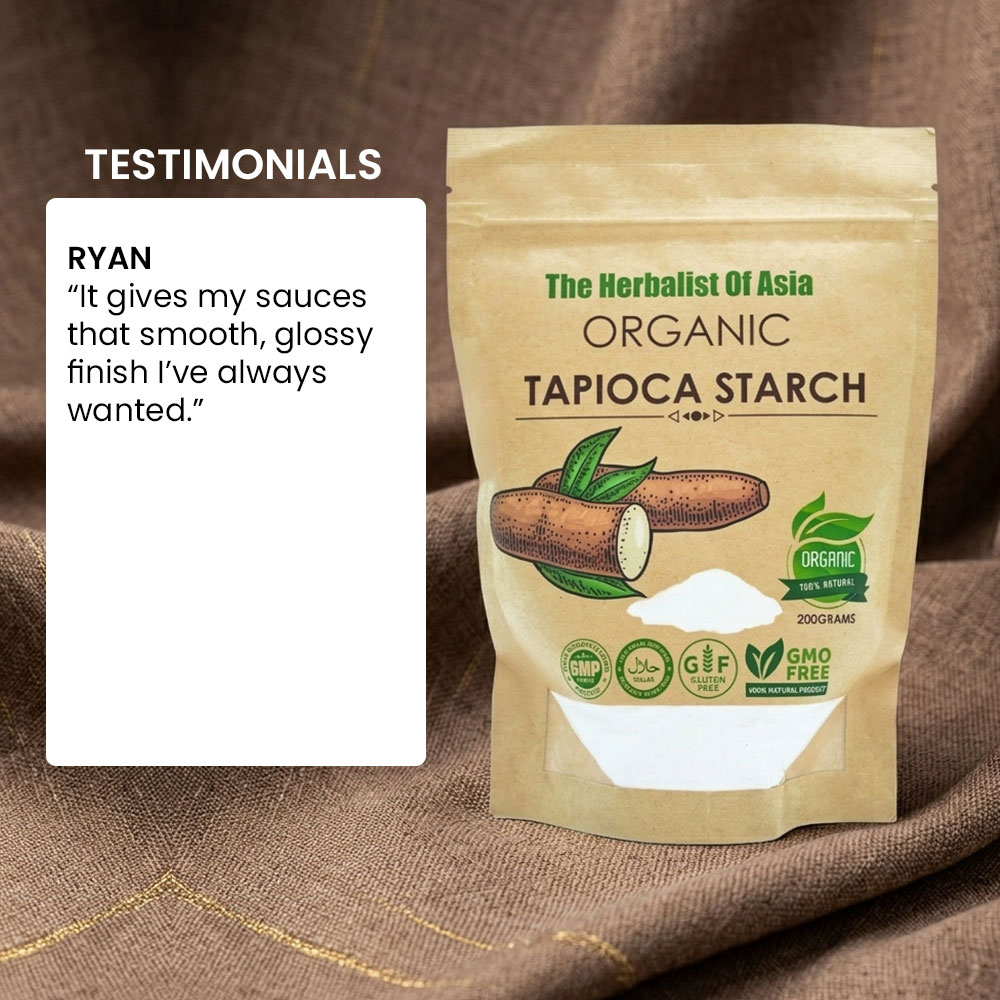
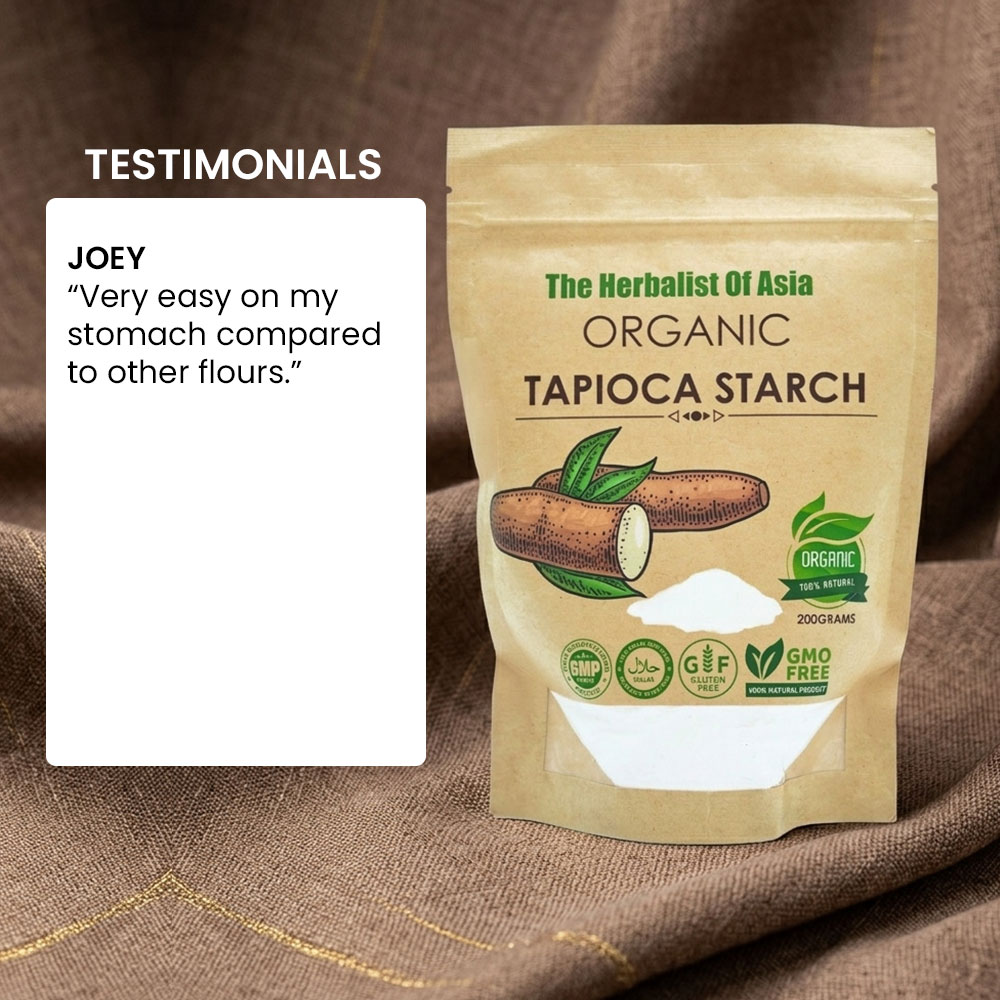
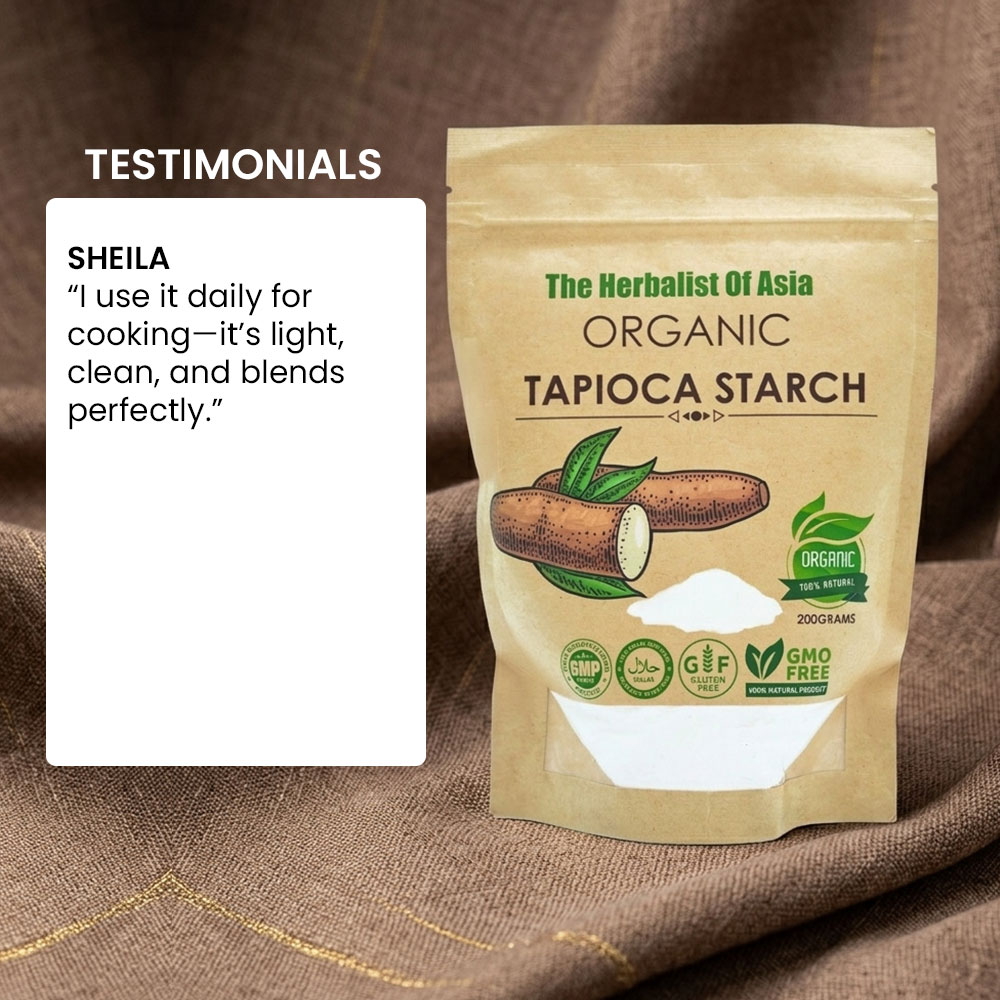
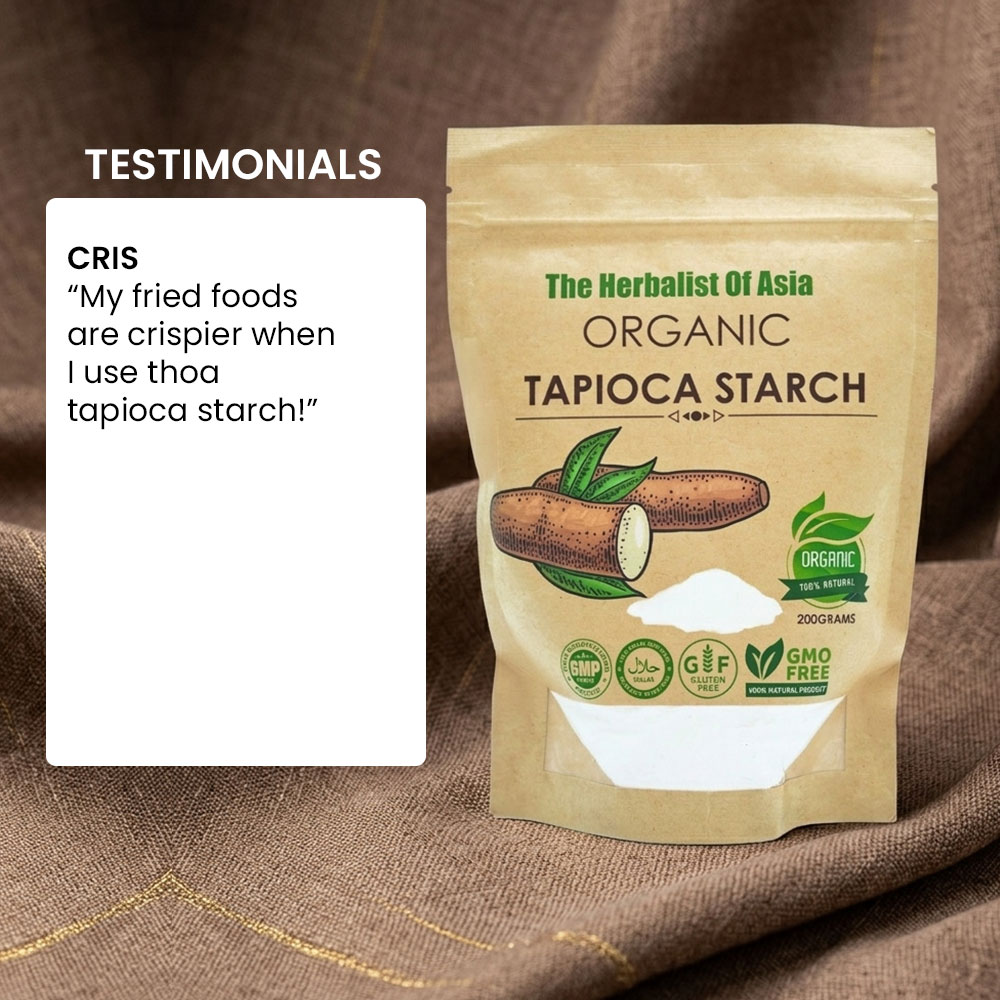
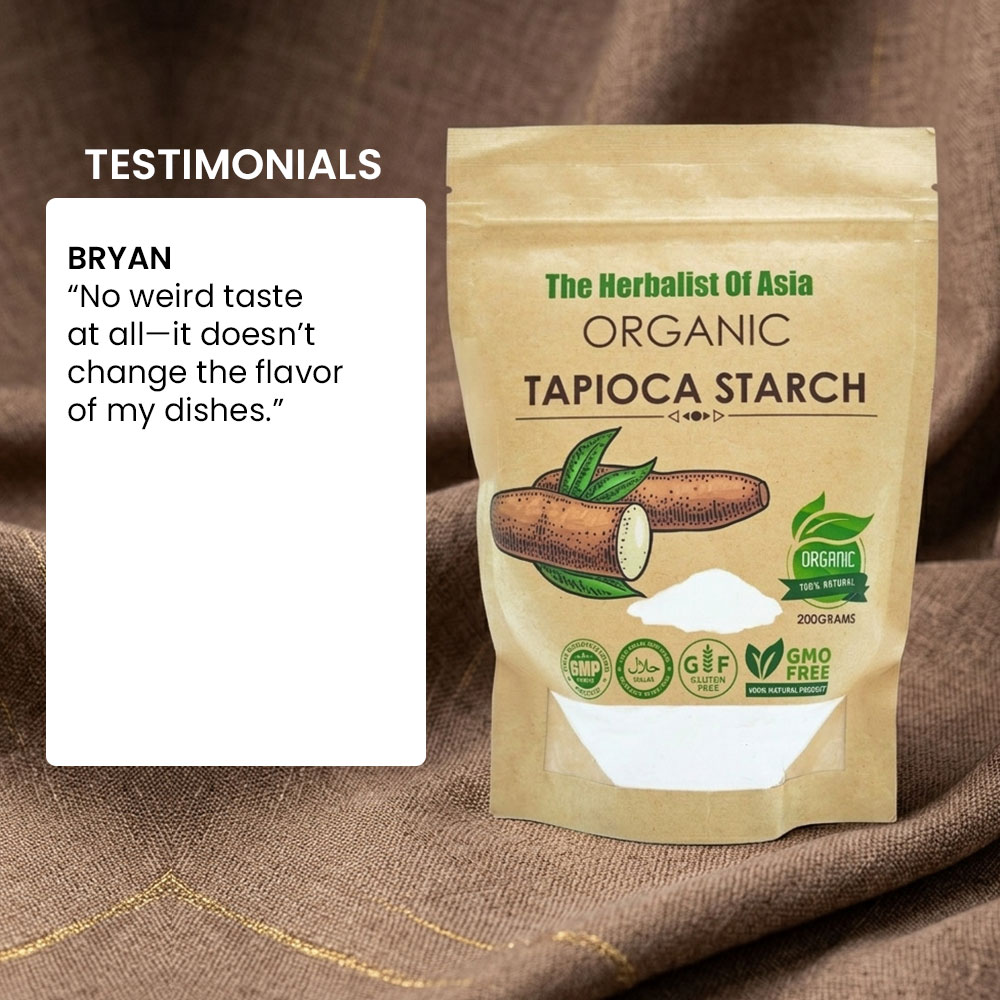
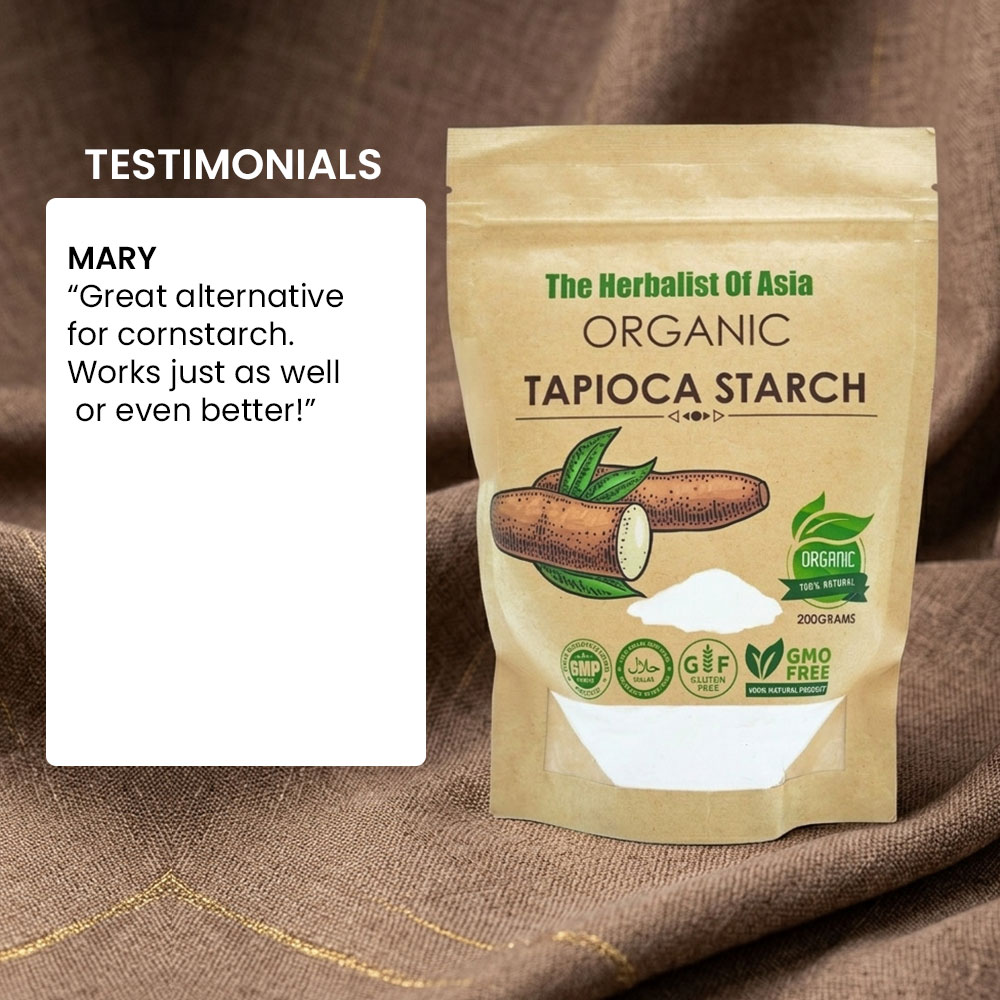



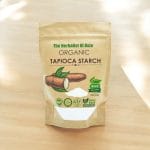
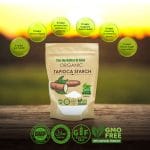
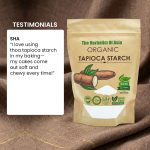
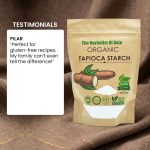
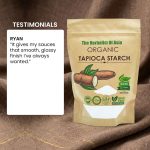
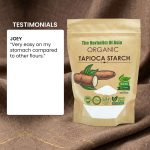
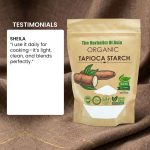
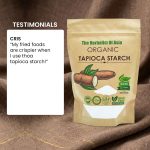

Description
Nutritional and Health Benefits:
- Gluten-Free Alternative:
- Tapioca starch is naturally gluten-free, making it an excellent option for individuals with celiac disease or gluten sensitivities. It can be used in gluten-free baking and cooking to replace wheat flour.
- Easily Digestible:
- It is easy to digest and is often recommended for individuals with digestive issues or those recovering from illness. Its low fiber content makes it gentle on the stomach.
- Source of Carbohydrates:
- Tapioca starch is primarily composed of carbohydrates, providing a quick source of energy. This can be beneficial for athletes or those needing an immediate energy boost.
- Low Allergen Potential:
- Tapioca starch is low in allergens compared to many other starches and flours, making it suitable for those with food allergies or sensitivities.
- Promotes Satiety:
- When used in recipes, tapioca starch can help increase feelings of fullness, which may aid in portion control and contribute to weight management.
Culinary Benefits:
- Thickening Agent:
- Tapioca starch is an effective thickener for sauces, gravies, soups, and desserts. It creates a smooth, glossy texture and maintains clarity in liquids.
- Improves Texture:
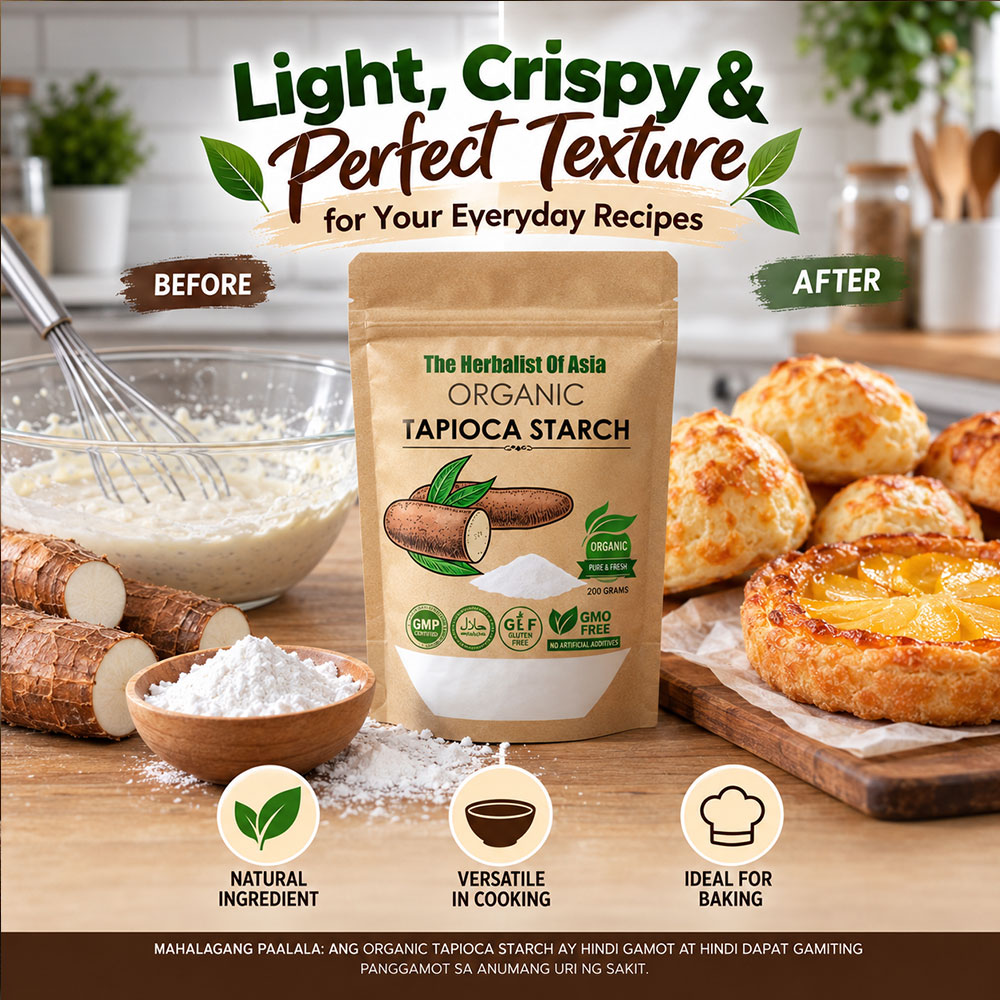
- In gluten-free baked goods, tapioca starch helps achieve a light and chewy texture, making it a popular ingredient in recipes for bread, muffins, and pancakes.
- Binding Properties:
- It acts as a binding agent in various recipes, such as meatballs, veggie burgers, and dumplings, helping to hold ingredients together.
- Versatile Ingredient:
- Tapioca starch can be used in a wide range of dishes, from savory to sweet, and is especially popular in Asian cuisines, such as in bubble tea and desserts.
How To Consume
As a thickener for sauces, soups, and desserts
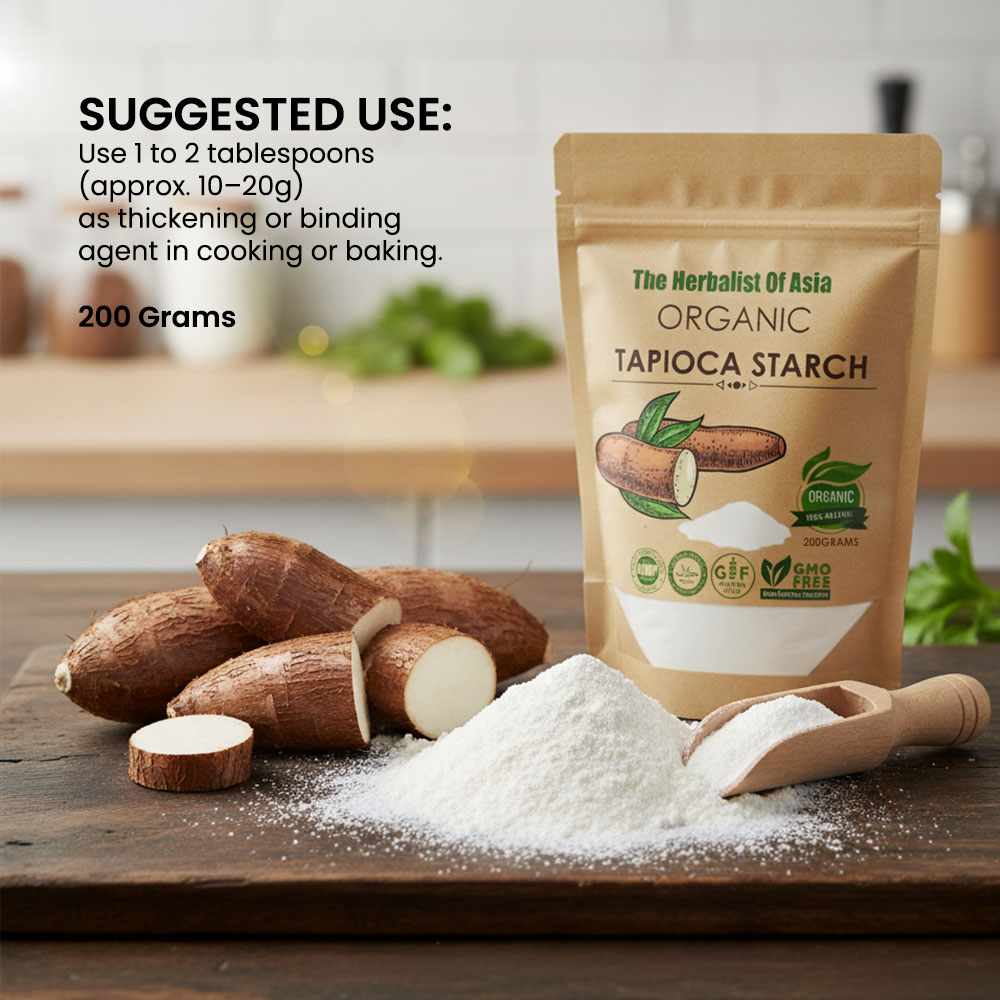
Mix tapioca starch with a small amount of cold water to make a slurry, then stir it into hot liquids near the end of cooking until the desired thickness is reached. It gives a glossy, smooth texture.
For baking and cooking
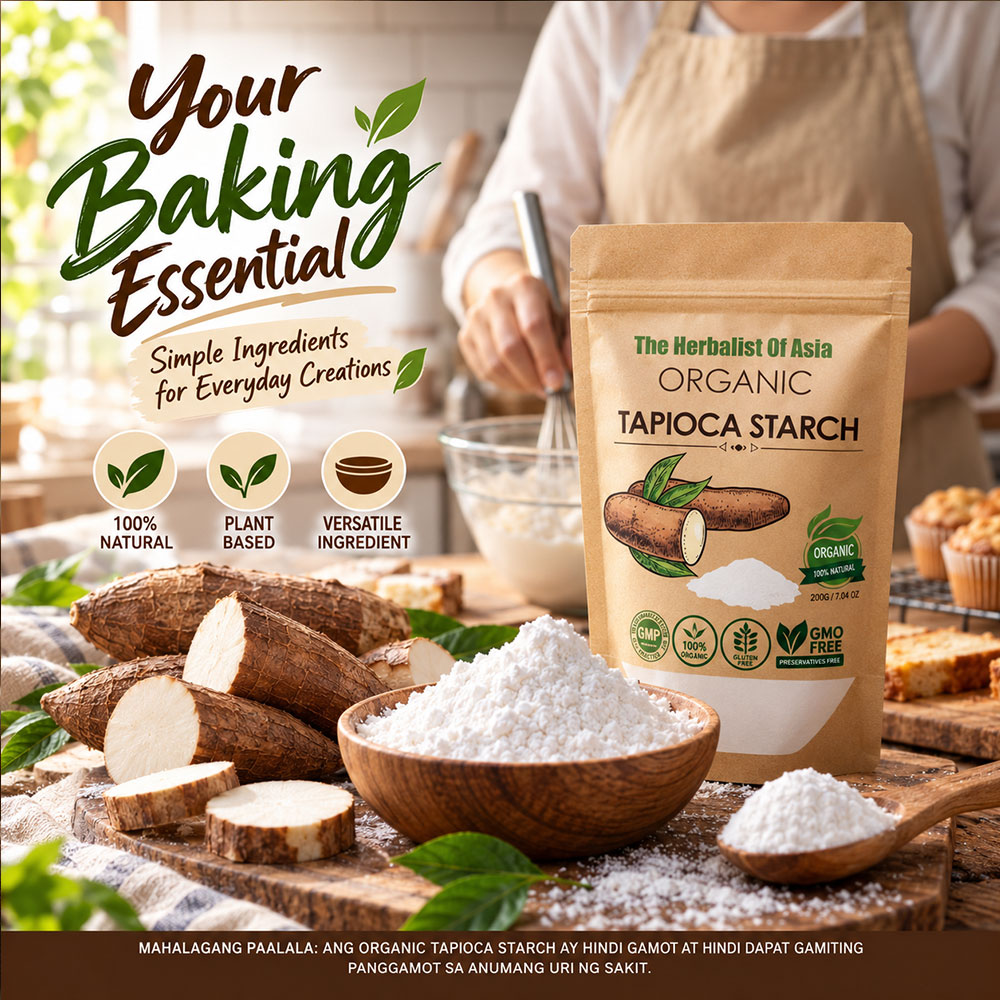
Use tapioca starch in baking to improve chewiness and softness in breads, cakes, and pastries, especially gluten-free recipes. It’s commonly used in recipes like cassava cake, mochi, and pão de queijo.
For frying and coating
Coat meats, seafood, or vegetables lightly with tapioca starch before frying to achieve a light, crispy texture.
As a binding agent
Tapioca starch helps bind ingredients together in recipes like meatballs, patties, and dumplings.
In beverages and desserts
It’s used to make chewy tapioca pearls and to thicken puddings, pie fillings, and fruit sauces.
Ingredients
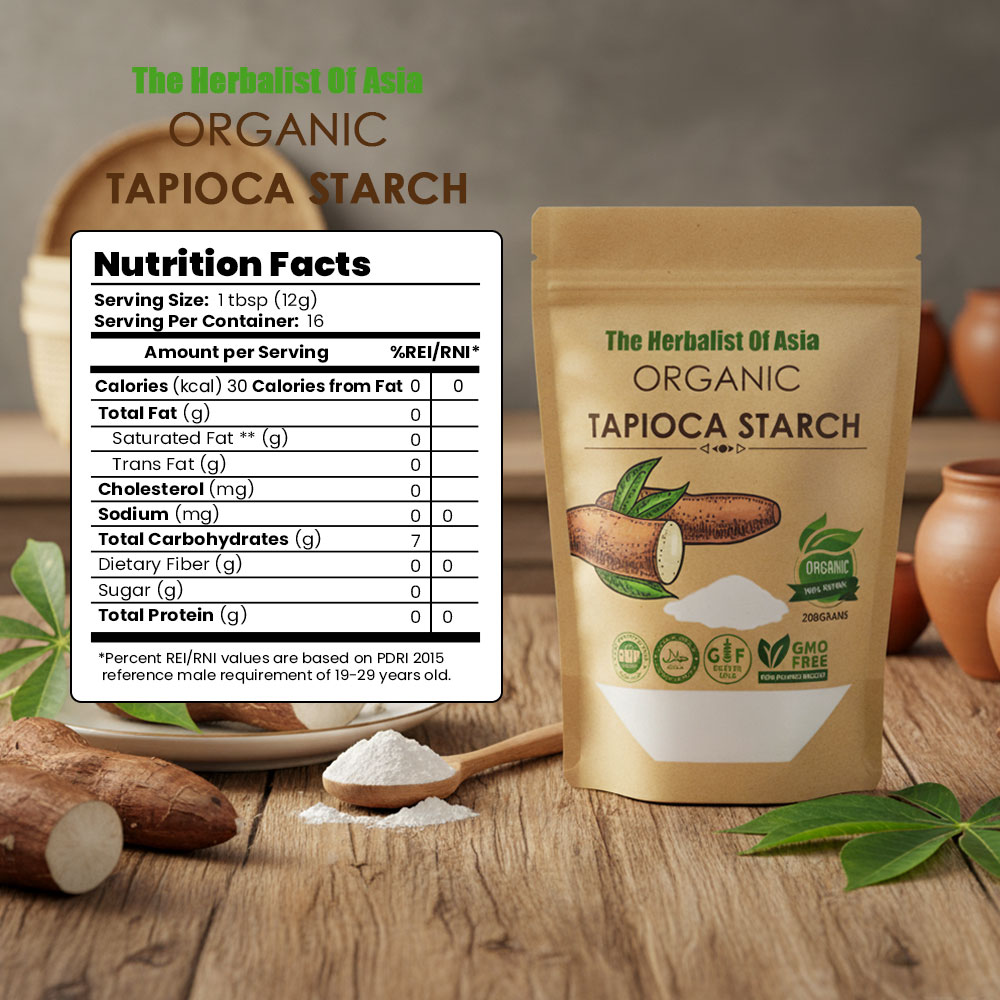
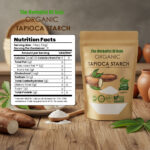
Nutrition Facts
Product Safety





Authenticity
You can verify the authenticity of this product through the official Brand Verification Website to ensure you’re getting only genuine and original items.
Brand Verification – Authenticity Always Wins: Say No to Fake Brands!
FAQs
Organic Tapioca Starch
• Digestive Tolerance: Nanggaling sa cassava tuber, ang organic tapioca starch ay walang gluten, grains, at karaniwang
allergens, kaya napakadali nitong tunawin ng mga may irritable bowel syndrome (IBS) o sensitive na tiyan.
• Functional Culinary Stability: Hindi tulad ng ibang starches, ang tapioca starch ay may magandang freeze-thaw
stability at viscoelastic properties na nagpapaganda ng texture at lambot sa mga special diet recipes.
4: Organic Tapioca Starch FAQs
Q1: Ano ang organic tapioca starch?
Ans: Ito ay pinong pulbos na nakuha mula sa starchy root ng cassava plant (Manihot esculenta).
Q2: Pareho ba ang tapioca starch at tapioca flour?
Ans: Sa mga grocery, ang “tapioca starch” at “tapioca flour” ay iisang produkto na galing sa parehong ugat [cite:
1].
Q3: Paano kumikilos ang tapioca starch sa gluten-free baking?
Ans: Nagbibigay ito ng elasticity, chewy texture, at ginintuang lutong sa gluten-free bread at pizza crust [cite: 1].
Q4: Maganda bang i-freeze ang organic tapioca starch?
Ans: Hindi tulad ng cornstarch, ang mga pagkaing pinalapot nito ay pwedeng i-freeze at tunawin nang hindi
nasisira ang texture .
Q5: Anong hitsura ang ibinibigay nito sa pie fillings at sarsa?
Ans: Nagbibigay ito ng makintab na kintab at malinaw na anyo nang hindi tinatakpan ang natural na lasa:.
Q6: Libre ba ito sa malaking allergens?
Ans: Oo, wala itong grains, nuts, soy, dairy, corn, at gluten.
Q7: Pwede bang gamitin sa boba pearls ang tapioca starch?
Ans: Oo, ito ang pangunahing sangkap sa paggawa ng chewy black pearls sa bubble tea.
Q8: May lasa o amoy ba ang tapioca starch?
Ans: Wala itong masyadong lasa kaya perpekto sa mga panghimagas .
Q9: Paano dapat itago ang organic tapioca starch?
Ans: Ilagay sa selyadong lalagyan sa tuyong pantry para hindi pasukin ng moisture o peste.
Q10: Gaano katagal ang shelf life ng organic tapioca starch?
Ans: Matagal itong masira kung tuyo at selyado, pero mas mainam gamitin sa loob ng dalawang taon .
Q11: Pwede bang ipalit ang tapioca starch sa cornstarch sa 1:1 ratio?
Ans: Pwedeng ipalit, pero mas kaunti ang kailangan at mas makintab ito kaysa sa cornstarch .
Q12: Kailangan bang i-slurry muna ang tapioca starch sa malamig na tubig?
Ans: Oo, para maiwasan ang pagbuo-buo kapag inihalo sa mainit na likido.
Q13: Paleo-friendly ba ang organic tapioca starch?
Ans: Dahil purong starch ito mula sa tuber at hindi sa grain, pinapayagan ito sa maluwag na paleo diet.
Q14: Pwede bang pampalapot sa maasim na likido?
Ans: Oo, hindi ito nawawalan ng bisa kahit sa maasim na fruit pies.
Q15: Ano ang mangyayari kapag nasobrahan sa init ang tapioca starch?
Ans: Pwedeng maging sobrang lapot o umunat nang labis ang sarsa .
Q16: Mataas ba sa carbohydrates ang tapioca starch?
Ans: Oo, high-carb ito na binubuo ng starch na halos walang protein o fiber.
Q17: Paano ginagawa ang organic tapioca starch?
Ans: Kinakaros ang cassava, ginagiling, hinahalo sa tubig, at sinasala para makuha ang purong starch na
pinatuyo at ginawang pulbos.
Q18: Pwede bang gamitin sa pagprito ang tapioca starch?
Ans: Oo, nagbibigay ito ng malutong at makintab na balat sa pinipritong pagkain.
Q19: Ligtas ba ito sa may allergy sa mais?
Ans: Oo, ito ang pangunahing pamalit sa cornstarch.
Q20: May GMO ba ang organic tapioca starch?
Ans: Wala, ipinagbabawal ng organic rules ang GMO cassava.
Q21: Pwede bang gamitin sa vegan cheese?
Ans: Oo, ginagamit ito para makuha ang malagkit at umawat na texture ng vegan cheese .
Q22: May sodium o cholesterol ba ang tapioca starch?
Ans: Wala itong sodium at cholesterol .
Q23: Bakit kailangan ito sa gluten-free flour blends?
Ans: Nagbibigay ito ng elasticity sa mga mabibigat na flours tulad ng brown rice o sorghum .
Q24: Pwede bang gamitin sa infant formula?
Ans: Minsan ginagamit itong pampalapot sa hypoallergenic baby formulas .
Q25: Kailangan ba ng mataas na init para lumapot?
Ans: Mababa lang ang init na kailangan kumpara sa ibang starches .
Q26: Pwede ba sa gravy?
Ans: Oo, pero mas makintab ito kaysa sa wheat-flour gravy .
Q27: Paano maiwasan ang buo-buo?
Ans: Ihalo muna sa malamig na tubig o isala gamit ang salaan .
Q28: Pareho ba ang cassava root at ang tapioca plant?
Ans: Ang tapioca ay ang pinalamig o pinatuyong starchy extract na nakuha mula sa cassava root .
Q29: Pwede bang gamitin sa cosmetics?
Ans: Ginagamit din ito sa talc-free body powders at dry shampoos .
Q30: Bakit pipiliin ang organic tapioca starch?
Ans: Tinitiyak nito na ang cassava ay itinanim at pinroseso nang walang synthetic chemicals .
FAQ’S TAPIOCCA STARCH
What is tapioca starch?
Tapioca starch is a fine, white flour extracted from the cassava root and is commonly used as a thickener, binder, and baking ingredient.
Is tapioca starch gluten-free?
Yes, tapioca starch is naturally gluten-free and suitable for people with gluten intolerance or celiac disease.
What are the benefits of tapioca starch?
It helps improve digestion, provides quick energy, enhances food texture, and is easy to digest while being low in fat and allergens.
How is tapioca starch used in cooking?
It is used to thicken sauces and soups, improve chewiness in baked goods, coat foods for frying, and bind ingredients in recipes.
Can tapioca starch be used for baking?
Yes, it’s commonly used in gluten-free baking to create soft, chewy, and moist textures in bread, cakes, and pastries.
Is tapioca starch safe for daily consumption?
Yes, when consumed in moderation as part of a balanced diet, tapioca starch is safe for daily use.
Does tapioca starch affect blood sugar?
Tapioca starch is high in carbohydrates and may raise blood sugar levels, so people with diabetes should consume it in controlled portions.
Can children and elderly consume tapioca starch?
Yes, it is generally safe and gentle on the stomach, making it suitable for children and older adults.
How should tapioca starch be stored?
Store it in an airtight container in a cool, dry place away from moisture.
Is tapioca starch the same as cassava flour?
No, tapioca starch is only the starch extracted from cassava, while cassava flour uses the whole root and contains more fiber.
Need Assistance?
Contact our leaders for faster transactions.
For a smoother and quick process, feel free to reach out to one of our leaders. They’re available to assist you with any questions or support you may need.
Contact Nos.:
For complains, suggestions or inquiries
We value your feedback! If you have any complaints, suggestions or other inquiries, please don’t hesitate to react out to us.
Contact Nos.:





Reviews
There are no reviews yet